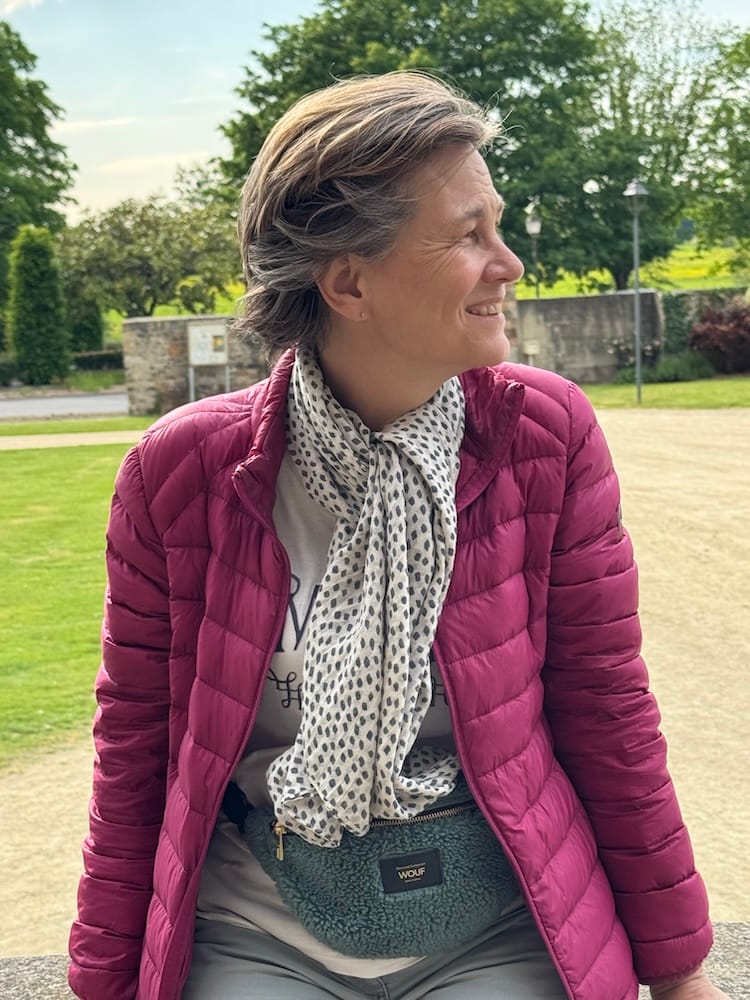
Civilisation Française Revisited
Friday, 15 May
Last week I fell in love with France all over again. And I’m feeling pretty tight with my bike too.
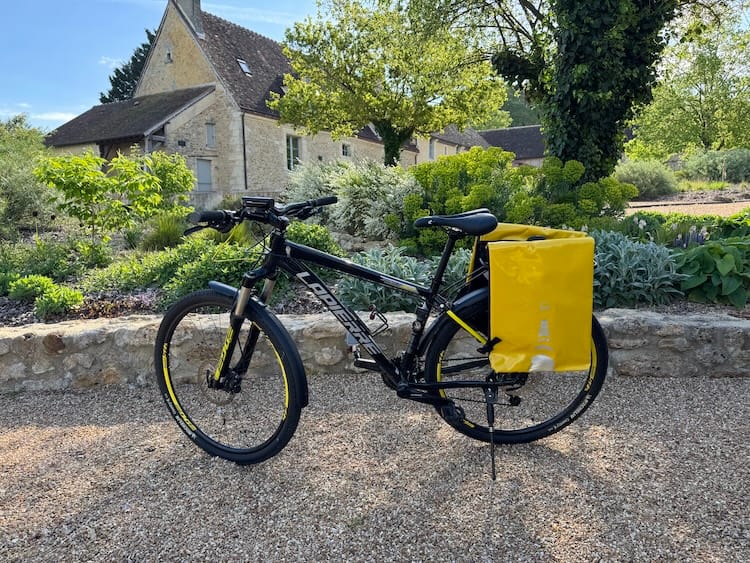
Virginie, a Paris and Berlin friend, dropped the idea of a May bicycle trip on me last year, and having never done such a thing, I signed on eagerly. In April, I got Vincent at our local Perche bike shop in Bellême to kit out my non-e-bike (fun fact: there seems to be no term for ‘normal’ bikes anymore in English; in French they are now called vélos musculaires) with baggage carrier, bright yellow carrier bags, mudguards and lights. He replaced the saddle that had been nibbled by mice over the winter, and I finally got a kickstand (merci, Vincent, pour vos attentions !).
But as the date approached, the feet became colder – I’m not sure why – I've been cycling for more years than I care to count – there are plenty of steep hills in the Perche. Perhaps it was fear of leaving my comfort zone or of not being able to keep up with my younger friend. Whatever the reason, I packed my sacoches, following Virginie’s instructions to the letter (light and little as possible, rain gear, first-aid kit, everything wrapped in plastic bags...), with growing angst.
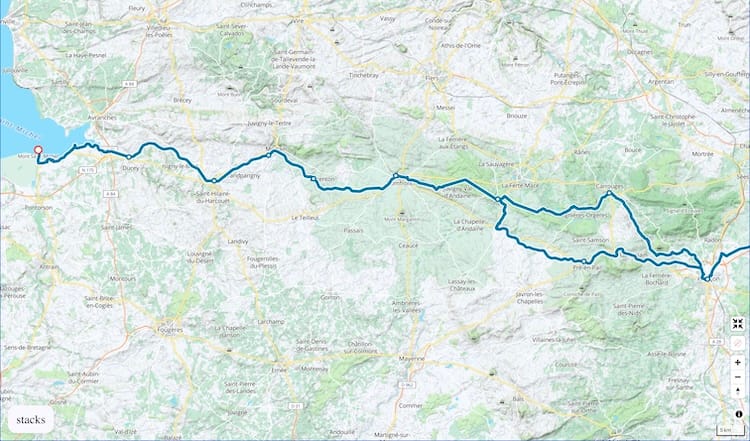
Mid-day last Thursday we met at the Alençon train station and joined the Véloscénie, a route that stretches from Paris to Mont St Michel, and much of which runs along a former railway line, now called la voie verte (the green line). We were hoping to ride the 165 kms/103 miles to the Abbey, but rain was predicted from Saturday on, and as Virginie reminded me, this was not supposed to be an ordeal.
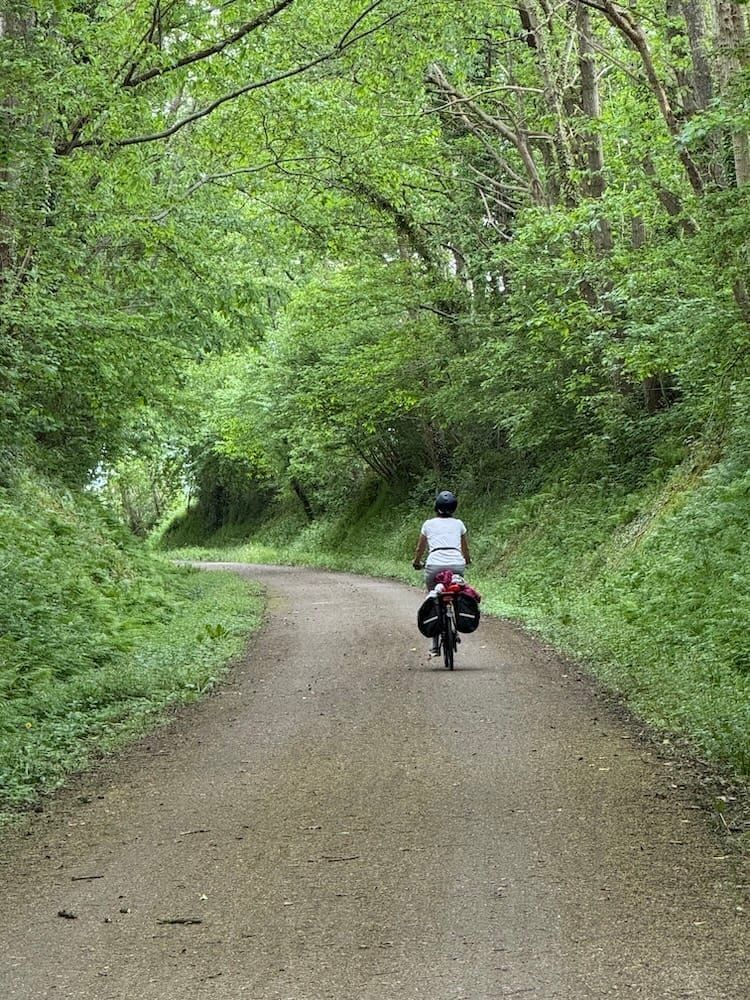
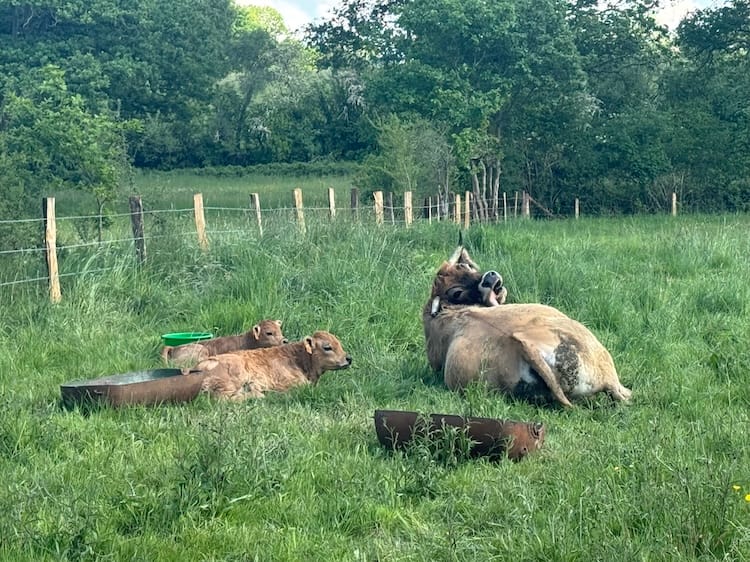
I don’t even remember the beginning I was so nervous, but quickly we were in the countryside, and I started to relax. The rolling landscape at the southern border of Normandy, with its small-scale agriculture, its cattle, hedgerows and copses, chased away the angst, flooded my prefrontal cortex with joy. And what better way to experience this pastoral bliss than from a bicycle on a relatively flat, raised railroad bed that in early May you have largely to yourselves.
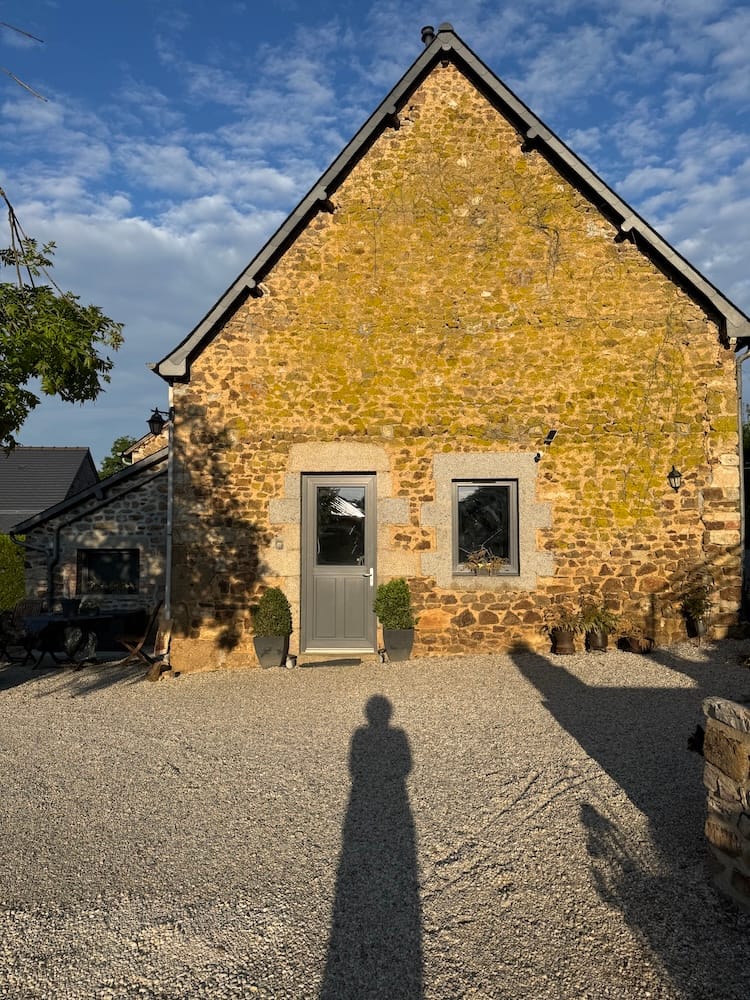
The first night we stayed in un gîte (Airbnb avant la lettre) that Virginie had reserved in St Samson, several kilometres north of Pré-en-Pail. The village was a climb from the voie verte and too small for a shop or restaurant. And we had nothing to eat. And we did not feel like riding back down and back up again. Pas de problème, said the owner who, with astonishing faith in strangers, lent us her old car to stock up on provisions at the local Super U.
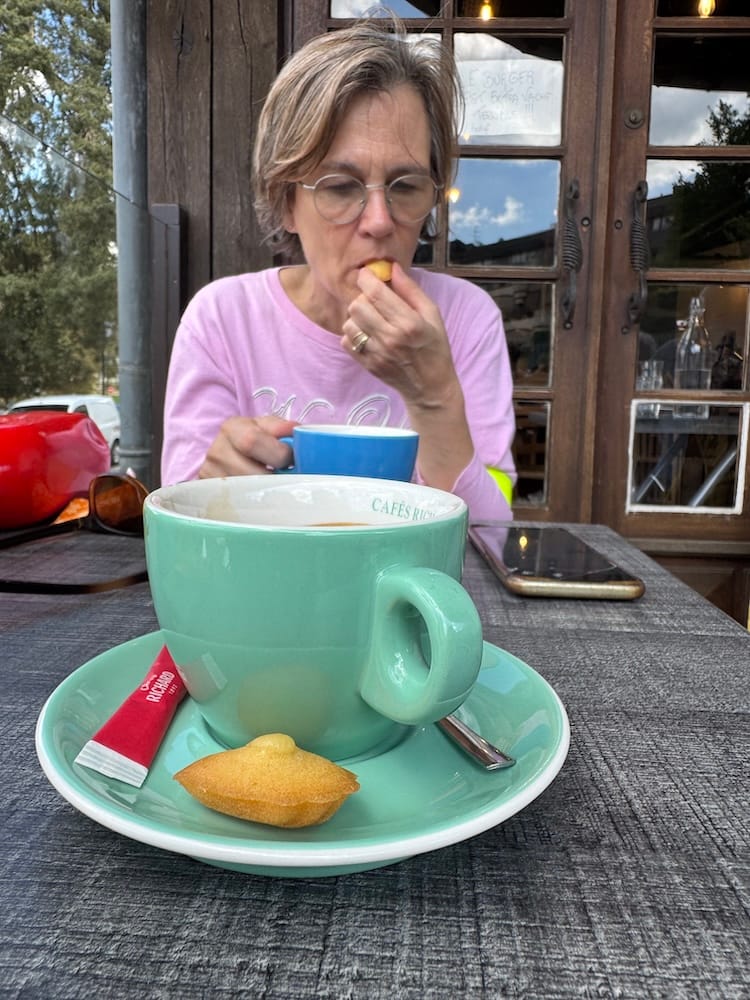
The next day we pedalled along the Mayenne River, in the northern tip of Loire country, then back into Normandy for a picnic lunch in the spa town of Bagnoles de l'Orne. Between the casino and late 19th century architecture, it reminded me of Cabourg and Marcel Proust, right down to the madeleines we got with coffee after our tomatoes and cheese on the lawn.
There we arranged our next hotel in the fortified town of Domfront-en-Poiraie, a higher climb than the previous day, but our tower rooms in la Maison sur les Remparts (House on the Ramparts) were worth a huff and a puff at the end of a long day.
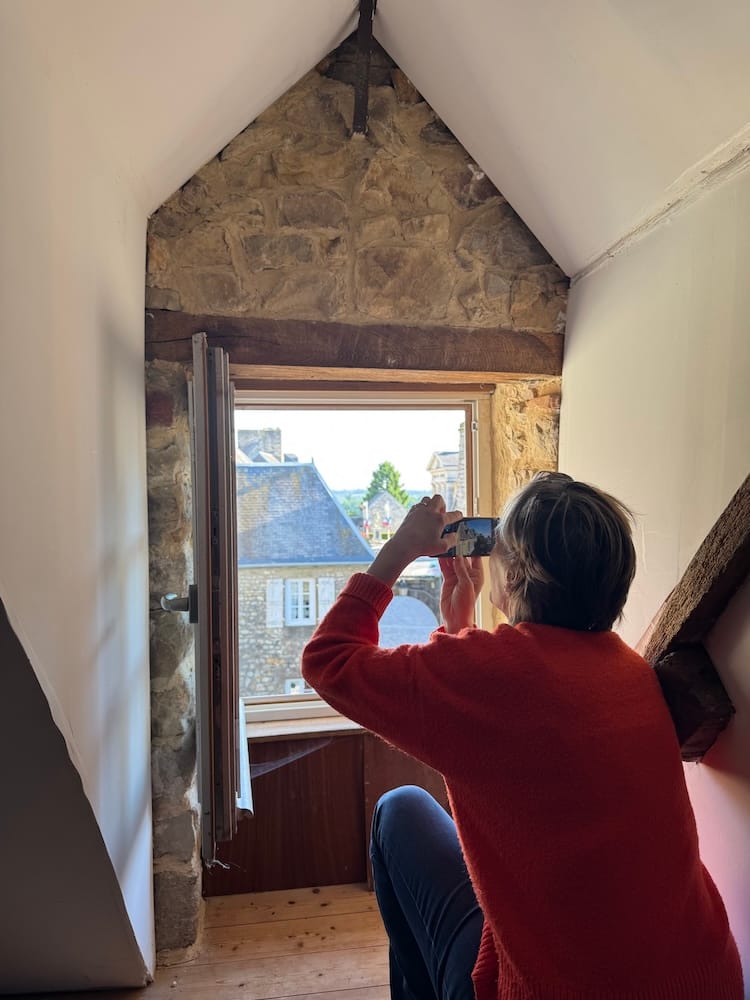
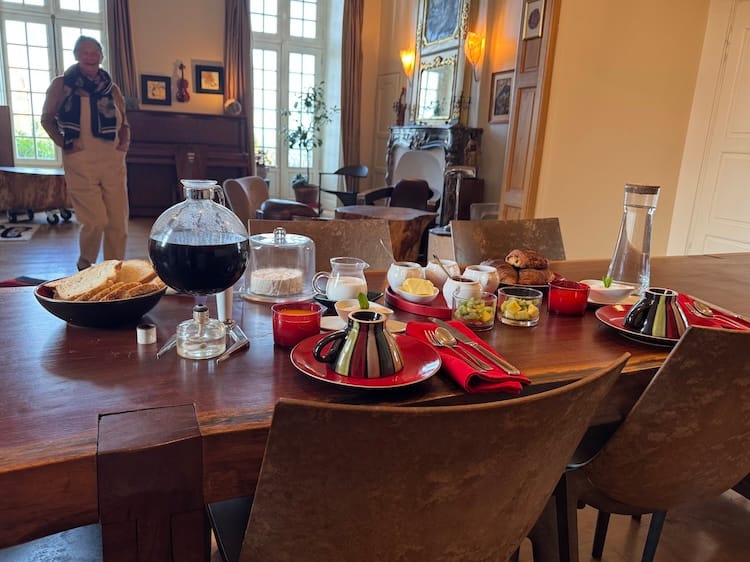
The chambre d'hôtes familiale (family bed and breakfast) is run by Blandine, a force of nature who also makes furniture, carpets and lights, who built the high bed where I slept under the rafters. Somehow she has also found time to launch and manage a street art fair in the nearby La Ferté-Macé. Not surprisingly, the breakfast was stylish, copious and delicious.
Though we'd left the yellow limestone of the Perche for the darker coastal granite, medieval Domfront stands at the southwest corner of our Département the Orne, and there is a shared history. The foundations for the now ruined château...
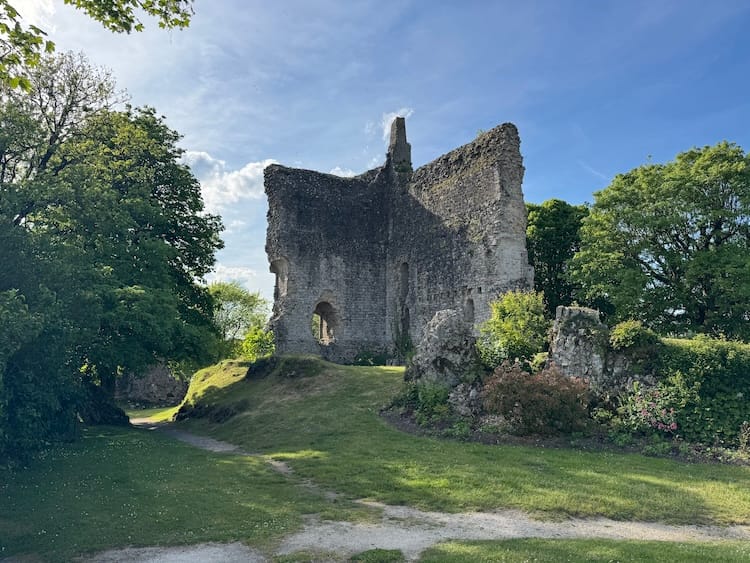
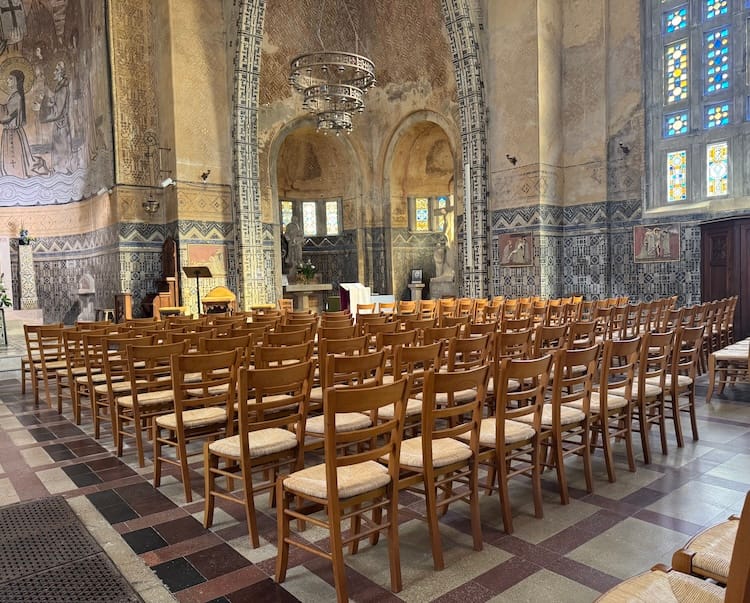
...were laid by the Guillaume de Talvas, Lord of (our local) Bellême, who ruled the region in the 11th century. The connection gave the town an air of familiarity, at least until we visited the St Julien church, built in concrete in the 1920s and improbably combining art déco with Byzantine...
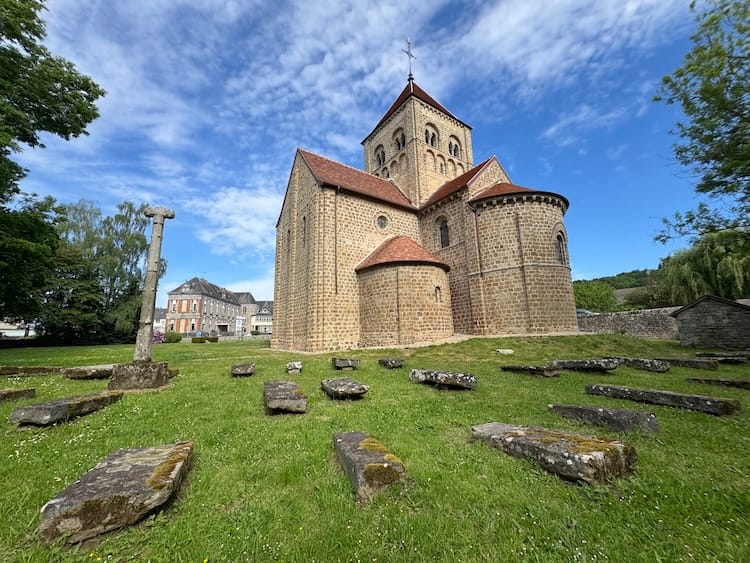
...a complete contrast to Notre Dame-sur-l'eau at the bottom of the hill. Also built under the aegis of Guillaume de Talvas, it is a sublime example of Norman Romanesque architecture (with a hint of early Gothic thrown in, 14th century).
On Saturday's long stretch of voie verte, we were constantly reminded how once upon a time in France you could take a train almost anywhere. Every few kilometres, at each crossroads, stood a former station house. Now private homes, some are almost unrecognisable but many others wear their past with pride.
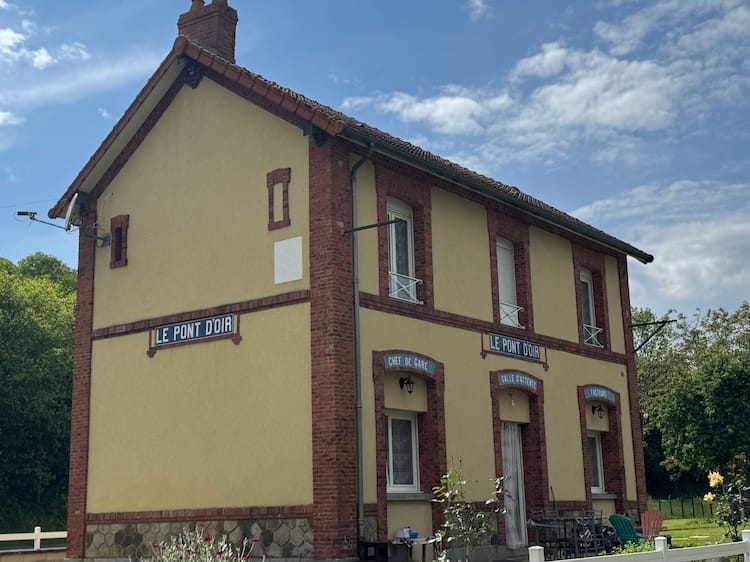
After our picnic lunch, the rain predicted for early afternoon threatened...
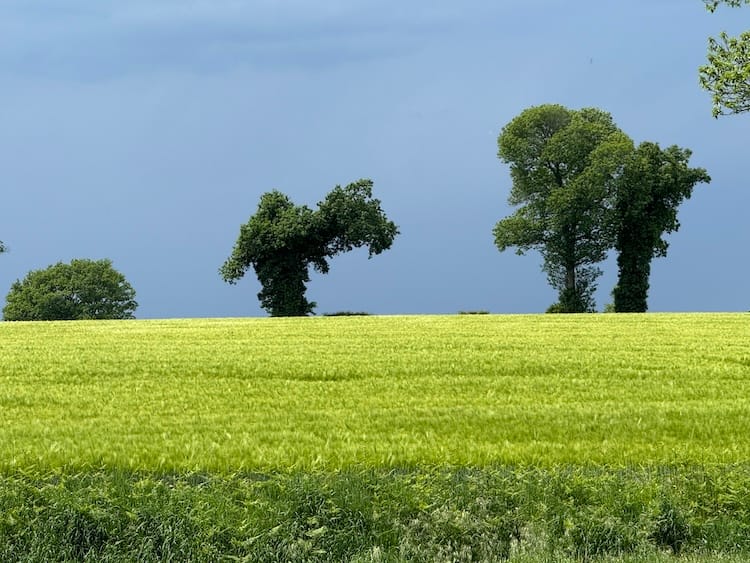
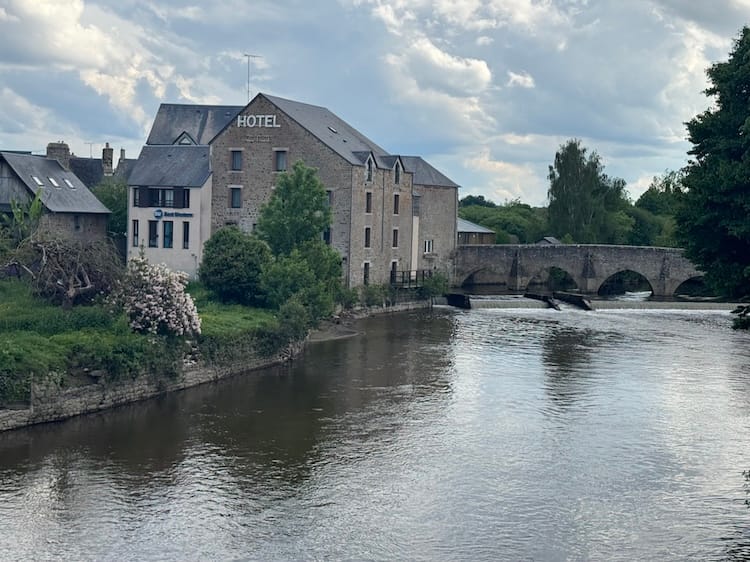
... but the clouds kept their distance until evening, giving us time to arrive at our former mill hotel in Ducey-les-Chéris...
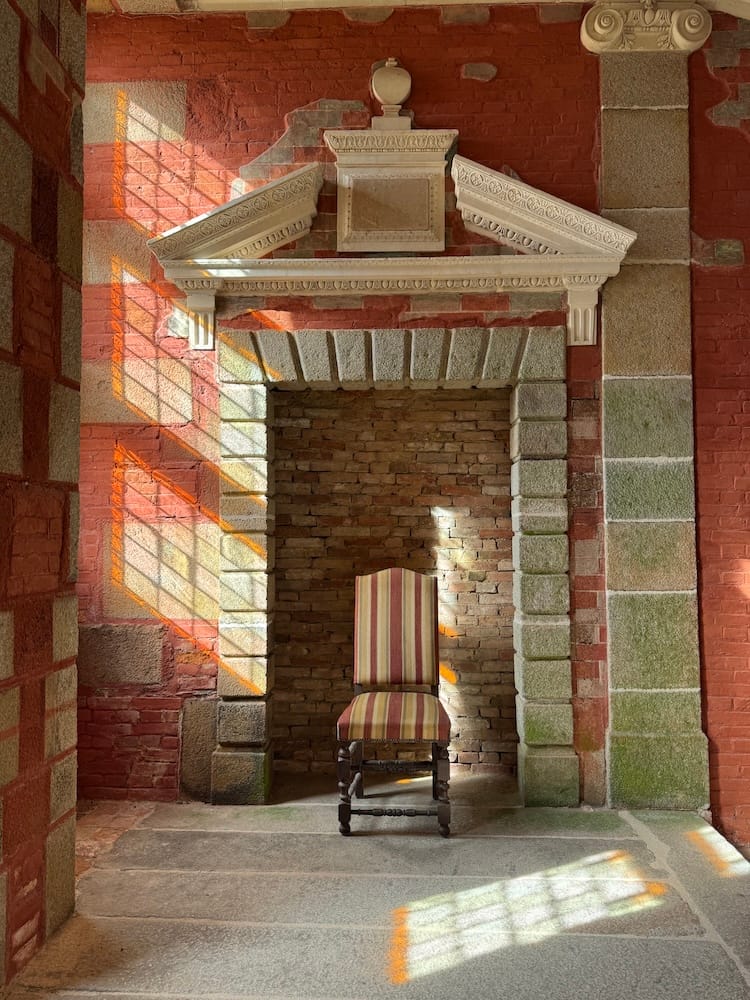
...and visit the Château Montgommery where the super-knowledgeable young guides talked as if Gabriel 1er de Montgommery and Roi Henri II were still alive and jousting (the former killed the latter in 1559).
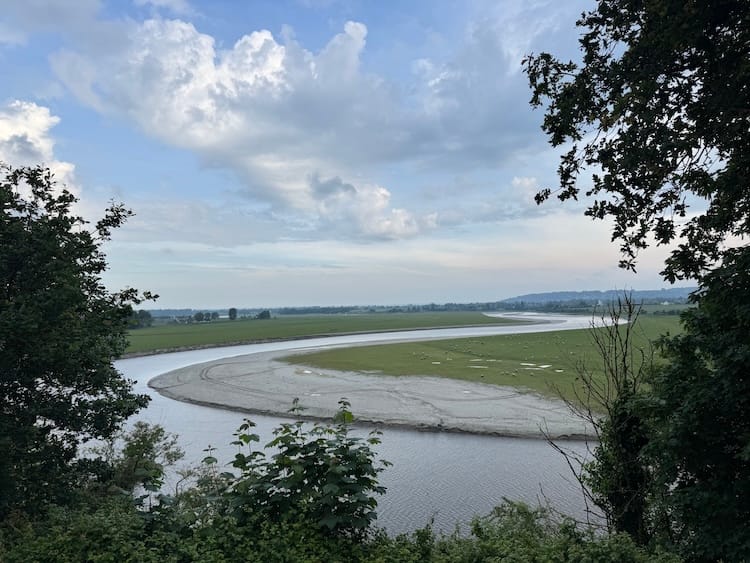
Rain pelted our windows in the night but had stopped by morning (it did seem some higher power was with us). On the last leg to the Mont St Michel, the terrain became flatter and more watery as we approached the sea.
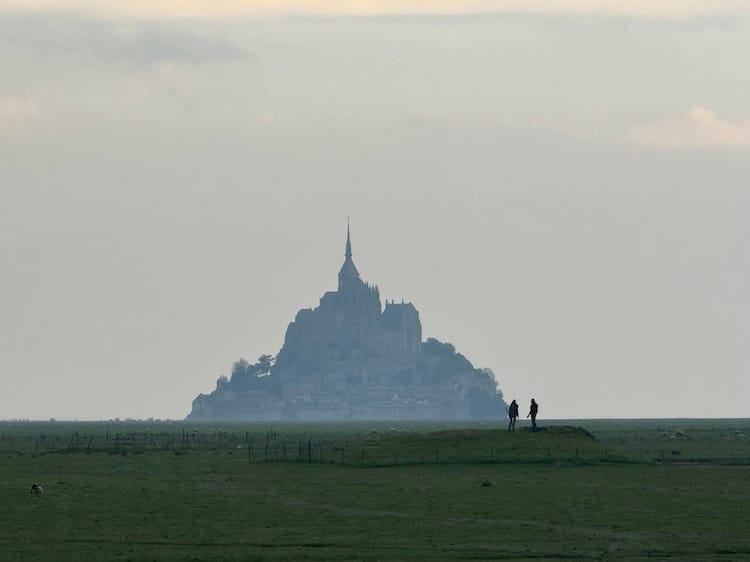
Soon the massive rock appeared on the horizon...
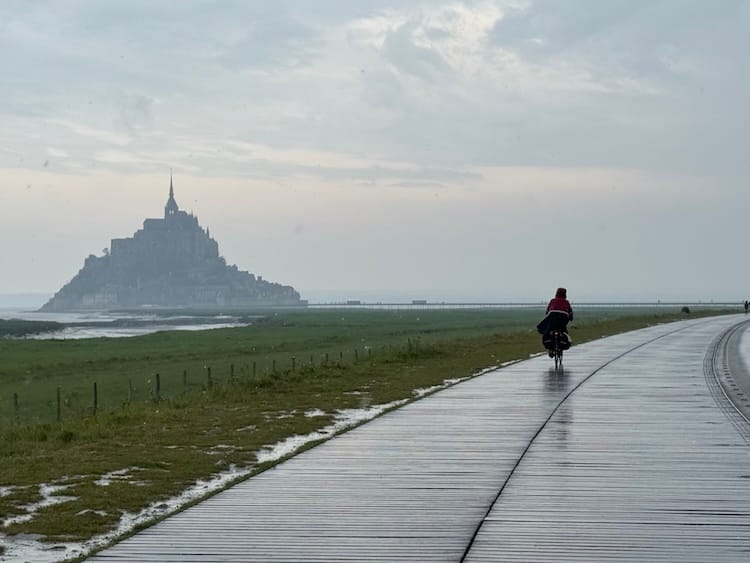
...and the rain finally fell. But what's a mini-pilgrimage without a celestial dousing? We hadn't packed our rain gear for nothing after all.
Round and round we wound through the wet polder, until...
We didn't stay longer on the holy rock than a hot coffee at the first café. The throngs of tourists, despite the weather, were a shock to our systems now geared to solitary cycling. We rode to this snug hotel in Pontorson...
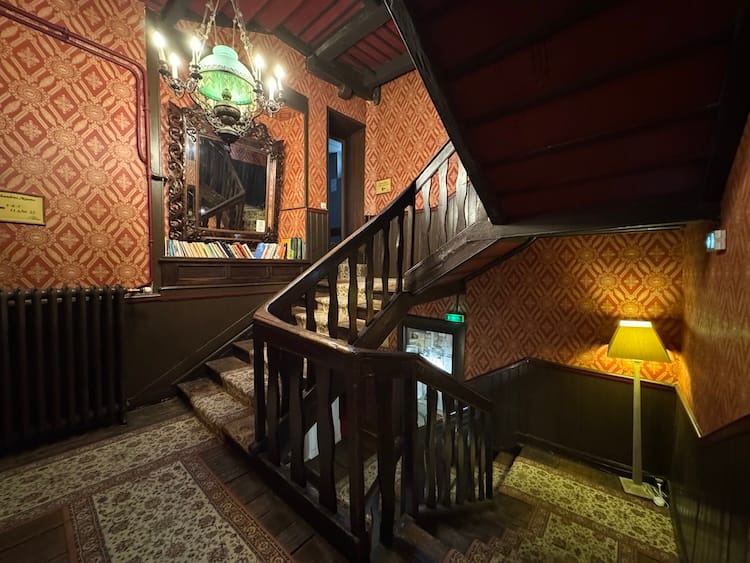
...and caught our trains home the next day. In all, we'd done 185kms/115 miles in three days. Not the Tour de France but enough to satisfy us.
And whether by wheel or on foot, I loved every millimetre of the journey.
People say the French are unfriendly, even stuffy. We crossed paths with only one classic French grouch (Nothing's right in the world!). Everyone else, along with those mentioned above, were all kindness, energy and smiling Bonjours.
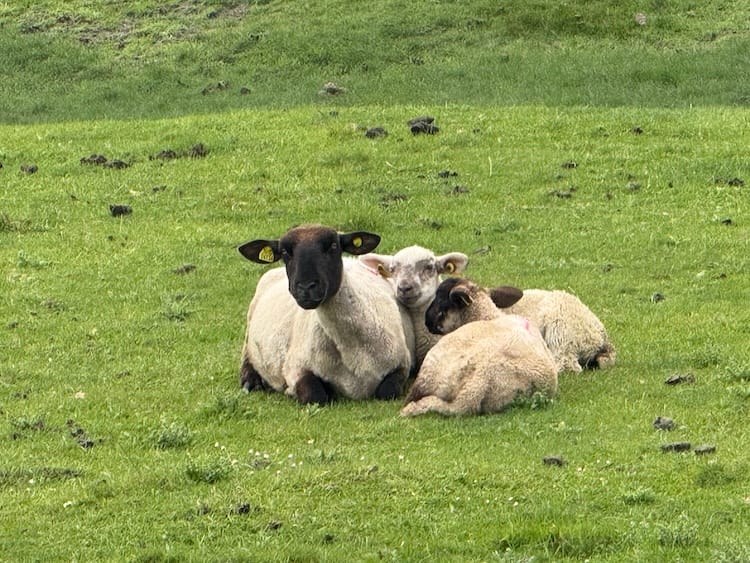
People accuse France of being stuck in the past. I would argue that she merely respects and values tradition and history, whether it's less intensive agriculture...
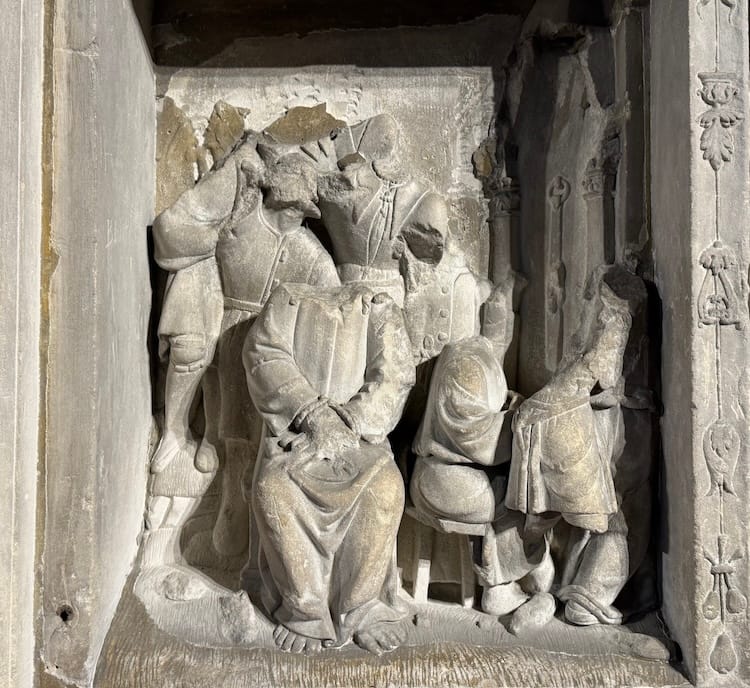
...or leaving figures that were decapitated during the Revolution on this church frieze as is...
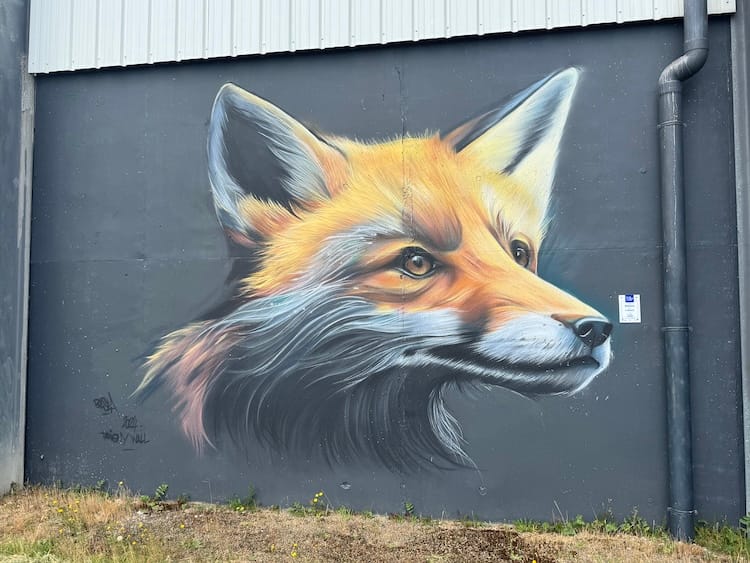
I would argue that the country lives perfectly in the present, from creating eco-touristic bike paths for its citizens to encouraging contemporary art along the way...
The title of my most recent novel, Civilisation Française, refers to the course at the Sorbonne, but naturally the young heroine learns much more about France than what is in the books. This trip was another lesson for me, the author, and a reminder of how lucky I am to live in this marvellous country, how fortunate to have dear friends here who nudge me into such civilised adventures.
Mille mercis, ma chère Virginie.