What Lies Ahead
Friday, 24 April
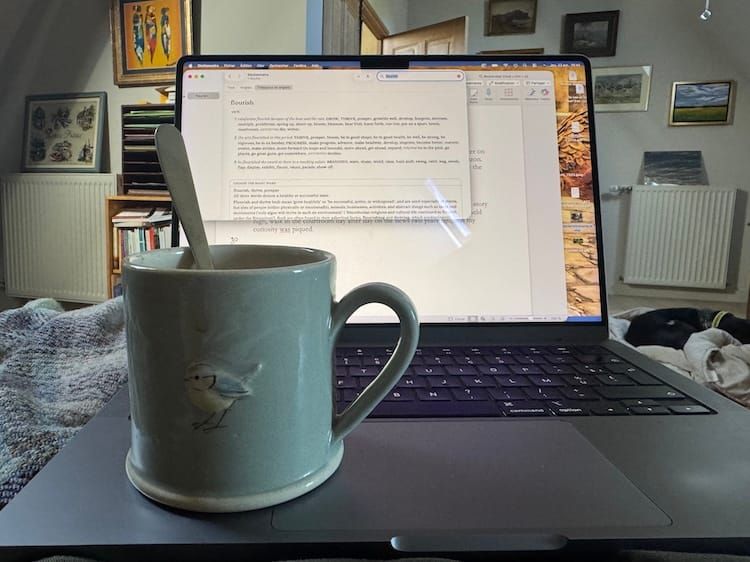
It's 6am in the Perche, and I am sipping a frothy double espresso on my chaise longue. Tasha is curled up on one of her several beds. At this time of year, the sun has risen just enough to wake the first songbirds. But regardless of the season, it’s the most cherished moment of the day. My little world is at peace.
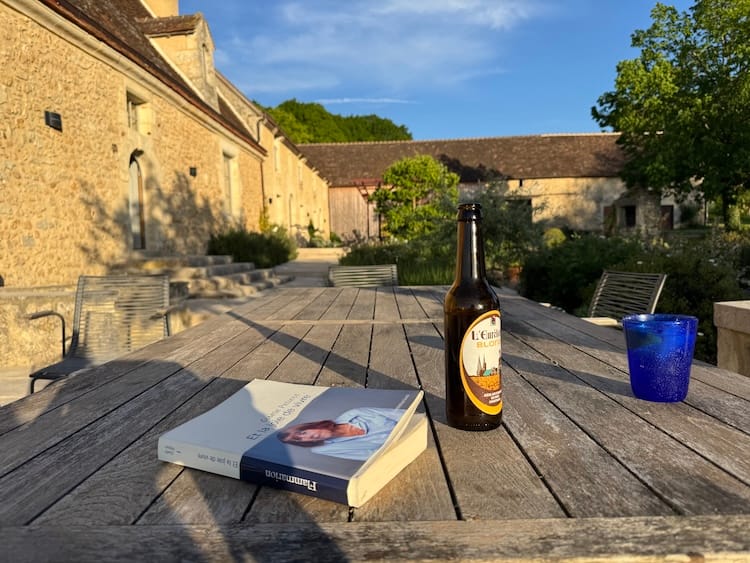
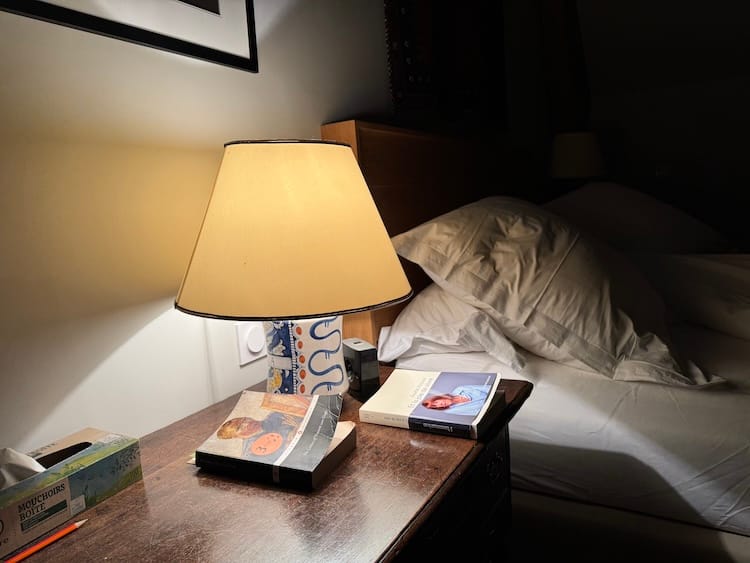
Morning coffee is on my mind because I am still under the spell of Gisèle Pelicot’s memoir Et la joie de vivre. The book, A Hymn to Life in English, was published in February and has already been translated into 22 languages.
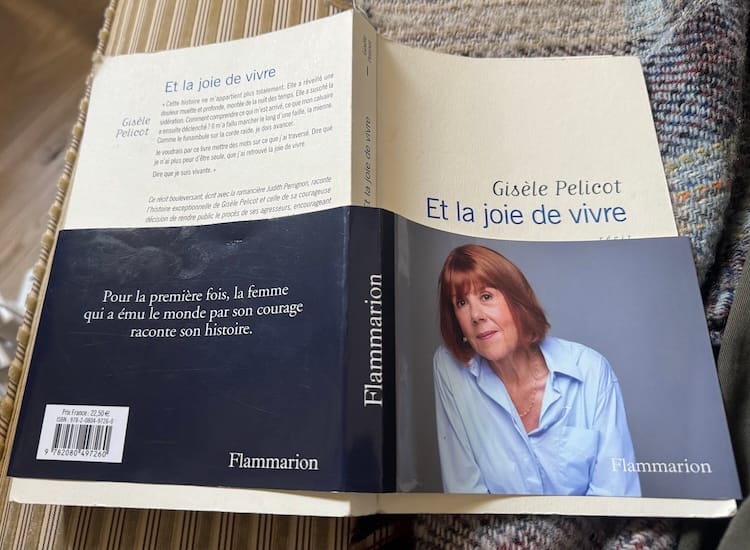
In case you missed l'Affaire Mazan: Gisèle Pelicot was a a wife, mother and grandmother living a tranquil retirement in the eponymous southern French town. In November 2020 she learned that for the last decade her husband of 50 years had been sedating her to the edge of death so he and dozens of other men recruited on the internet could rape her, treat her body like a rag doll.
Because he’d filmed and photographed his inert wife during at least 200 assaults, Dominique Pelicot's conviction at the 2024 trial was a foregone conclusion. The question was the length of his sentence and the fate of the other 51 men aged 22 to 70 from a wide range of professions (mason, fireman, nurse, journalist, for example) who claimed their innocence, avowed that the sex was "consensual", despite the site on the now defunct coco.gg being called à son insu, Without Her Knowledge. Mr Pelicot received the maximum 20 years, all the others varying, shorter prison terms. One man appealed. In the second trial, his sentence was prolonged from nine to 10 years.
I hadn't followed the case closely but did know that a gruesome fait divers had ballooned into a cause célèbre because at the last minute "Françoise P" or "Marie" had dropped the pseudonyms and called for a public trial. Gisèle Pelicot and the sordid details of her trauma would be exposed to the world. "Je n'ai pas à avoir honte" (it's not for me to feel ashamed), she said. I’d seen on the news how this poised woman, shoulders back and red head held high, walked ethereally through cheering crowds to the courtroom day after day, inspiring many other rape victims to come forward. I'd read about the devastating effects on her family.
A post-trial tell-all is not the kind of book I usually buy. But my curiosity was piqued. Specifically, why she hadn't suspected foul play, and how joie de vivre could find its way into the title.
The book is anything but sensationalist. With the help of professional journalist-novelist Judith Perrigon, Gisèle Pelicot weaves the before, during and after of her life in spare, penetrating prose. The idyllic country childhood that ended abruptly with her mother's death from cancer when she was nine. Her soldier father's remarriage to the stepmother from hell. Her marriage at 19 to a man also emerging from a troubled youth, Dominique Pelicot. How even without a high school diploma, she rose to a management position at EDF, the national electricity company. It was her husband who couldn't keep a job, was always putting them in debt. Gisèle nevertheless believed that they were soulmates, that life with their three children and several grandchildren was good, as normal as yours and mine.
Until autumn 2020, when Mr Pelicot was caught filming under women's skirts at a Leclerc supermarket. By the time the couple was called to the police station on 2 November, 20,000 photos and videos cataloguing his sexual perversions had been uncovered on his seized devices. Most were of his wife, but there were some compromising images of their daughter and daughters-in-law too.
That morning, Gisèle's life fell apart but also started to make sense. The severe memory losses that the neurologists couldn't explain but that she was convinced were symptoms of a brain tumour like the one that killed her beloved mother. Or maybe early dementia. Now she knew her mind had been addled by the heavy doses of drugs he'd put in her food and drink. She could explain her beer strangely turning blue one evening.
Then there were the recurring gynaecological problems that despite many medical consultations, always in the company of her vigilant husband, remained a mystery. Or the suddenly wobbly dental crown delicately plucked from her mouth one morning by the ever attentive Dominique. The crown had been forced loose by a stranger ramming his penis down her throat the night before. In one of the videos, she almost suffocates.
In the intervening years between his arrest and the trial, additional charges are brought against Dominique Pelicot involving unsolved cases of rape and even a murder (not proven) from the 1990s. So much for the "decade" of abuse.
During the trial, there is the uncomfortable proximity to the 51 unrepentant men who joke and slap one another on the back. They and their lawyers stare her down with disdain, even hatred, when she announces the trial will be public. Not even the sickening photos and videos displayed on the screen soften them.
Gisèle holds strong, sheds not a tear that might satisfy her predators and others who still insist she must have wanted this. By now she is divorced and living on the Ile-de-Ré, near a house owned by her daughter and family. Except they are no longer speaking. After seeing photos of her own comatose body dressed in unfamiliar undergarments, Caroline believes she too was raped, by her father and others. Instead of bringing the family closer, the sins of the father have worked like a scatter bomb to divide them.
But Gisèle starts to rebuild. She takes long, soul-searching walks with her dog. She meets new people on the Ile-de-Ré, including Jean-Loup, a recent widower.
Unlike her children, she refuses to repudiate the happy memories, despite the monster lurking in their shadow. She knows it's possible partly because, justement, she has no memory of what her flaccid body suffered under the beastly men, at least 20 of whom could not be identified and are still on the loose. She doesn't minimise what happened. But if she denies the last half century, she says, she is no better than dead.
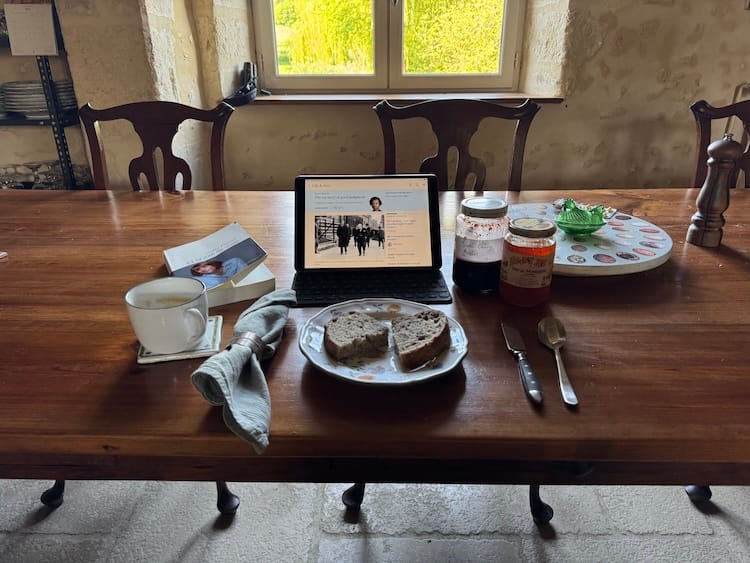
Which brings us, finally, to the morning coffee. The book starts with Gisèle preparing breakfast for her and her husband on November 2nd, just before their meeting at the police station and the collapse of her world. She always lays everything out the night before. The preliminaries, the smell of coffee and toast, help Gisèle believe in the day to come, in what lies ahead.
I do not lay out my breakfast or even eat it until after some work and a dog walk. But I know what she means about the new day. And I understand better, after reading the book, the joy this strong, brave woman is determined to extract from life.
Near the end of this magnificent, empathetic book, Gisèle Pelicot, who keeps her surname so her children will not be ashamed of it, sums up her story as "more than a parade of monsters. It's a plunge into all of us, ordinary men and women, into our bedrooms, our attachments, our families, our nether worlds. This story conjures up our violence, our scarcely buried squalor, our sleeping fears, our silences, our flight; it is the soiled reflection of the domination and predation that still structure our world."
It's this and much more. Buy the book. You have 23 languages to choose from.