How We Are
Friday, 31 July
Several friends and family members have written recently asking about the forest fires in France and whether we are anywhere near them. They want to know how we are.
The Perche, which you will not find on a map because it is a historical rather than an administrative entity, covers the southern tip of Normandy in the Departments of the Orne and the Eure-et-Loir, with splashes in the Sarthe and the Loir-et-Cher. Though there seem to be no two maps that are identical, here's the tourist office's rendition (apologies for the poor quality).
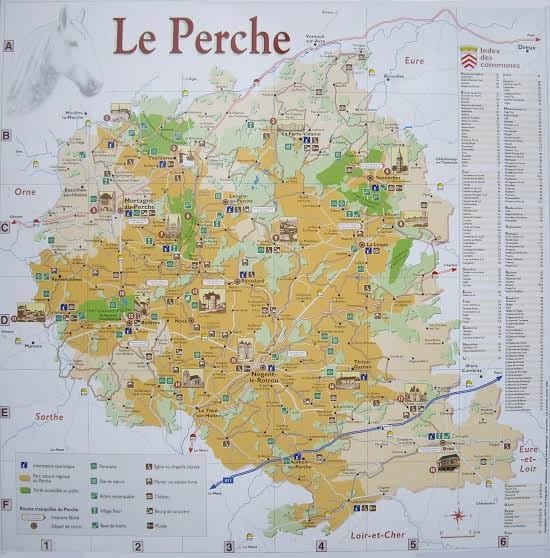
However configured, the region is fortunately much farther north than the worst fires now closing in on the city of Bordeaux and as of this morning, on the house of George and Amal Clooney (no, not even star dust can keep you safe). So far 117,000 hectares/289,113 acres have burned and it's only the end of July. We'll see what happens in August, historically the worst month for European forest fires, though I guess there's less and less to burn.
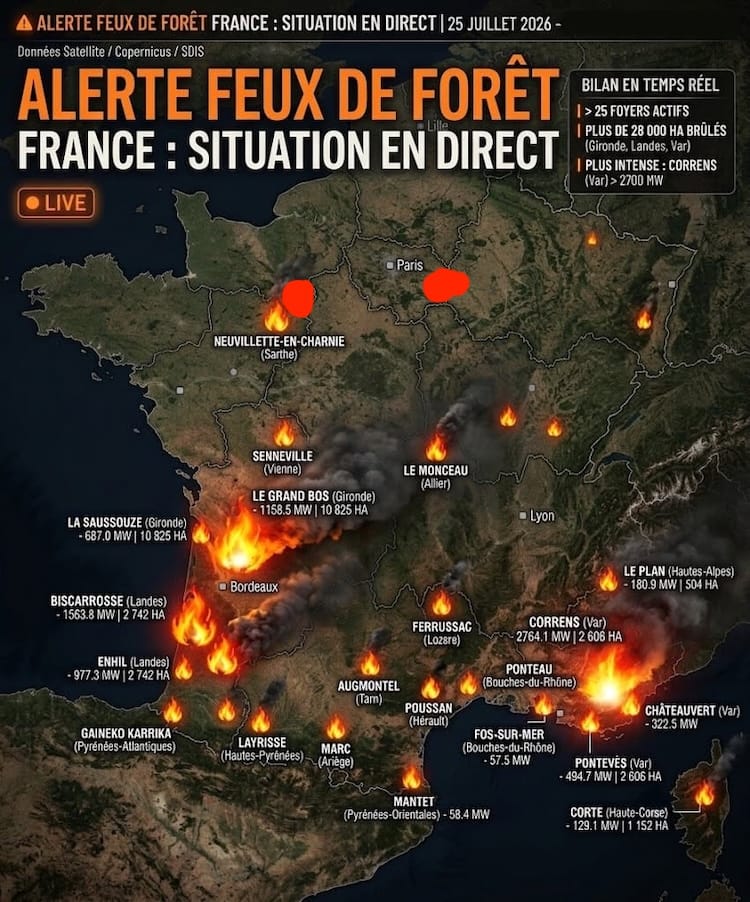
In the Perche (left red blob, more or less), we’re closer but not dangerously so to the fire that raged in Fontainebleau (right red blob, more or less) two weeks ago and that advanced near Paris before being extinguished. The one near us on the map in Neuvillette-en-Charnie started in a field and only burned 18 hectares/44 acres of land.
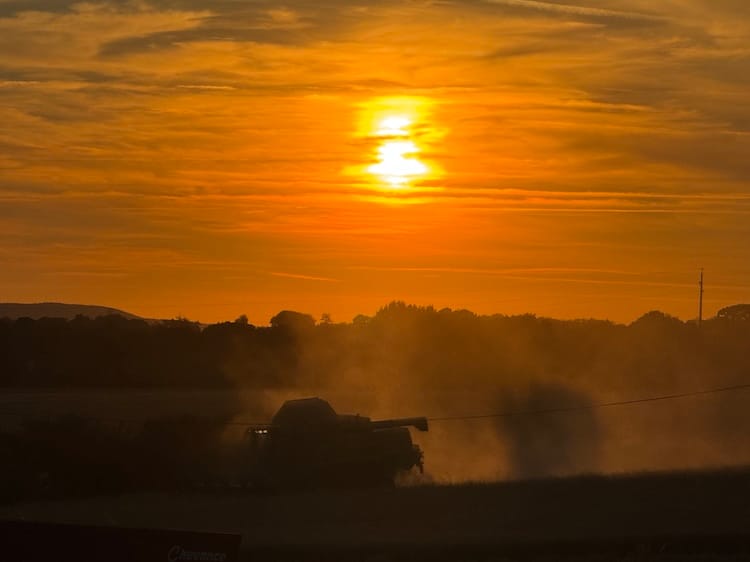
We’ve so far been spared the fires, but the conditions in the Perche are certainly ripe for a good blaze in one of our many oak forests. During the wheat harvest earlier this month, farmers were restricted to reaping before 11am or after 7pm. The risk of fire from overheated machines and tindery crops was too high.
In our local town of Bellême, many shops have been re-opening later than usual in the afternoon (yes, small shops, especially outside Paris, still close for at least a two hour lunch break) due to unbearably high temperatures. The butcher has stopped re-opening at all.
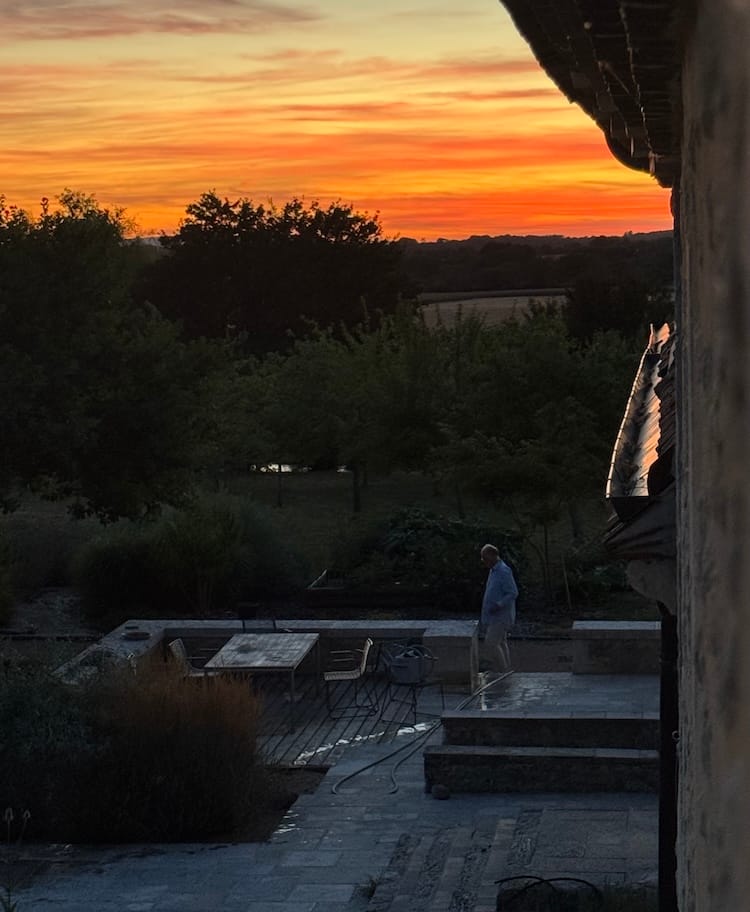
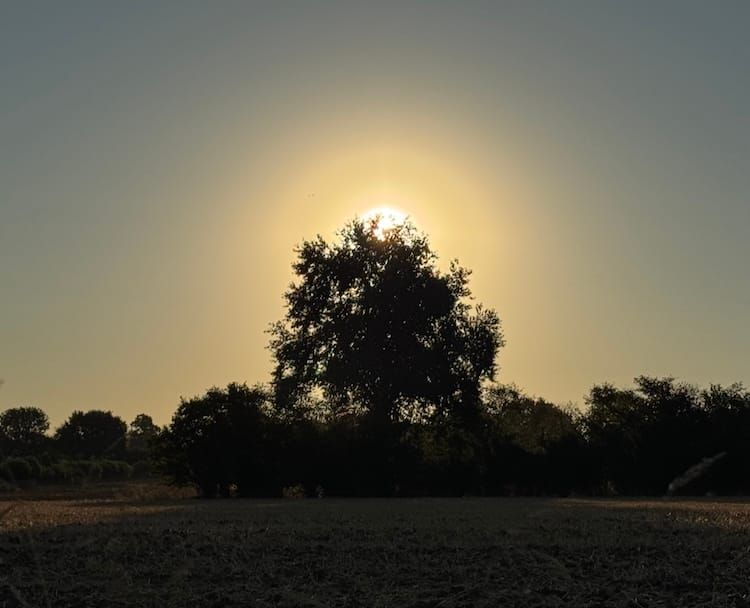
We spend a good part of our time managing heat and water. At night, we fling open the windows; in the morning we shutter them back up.
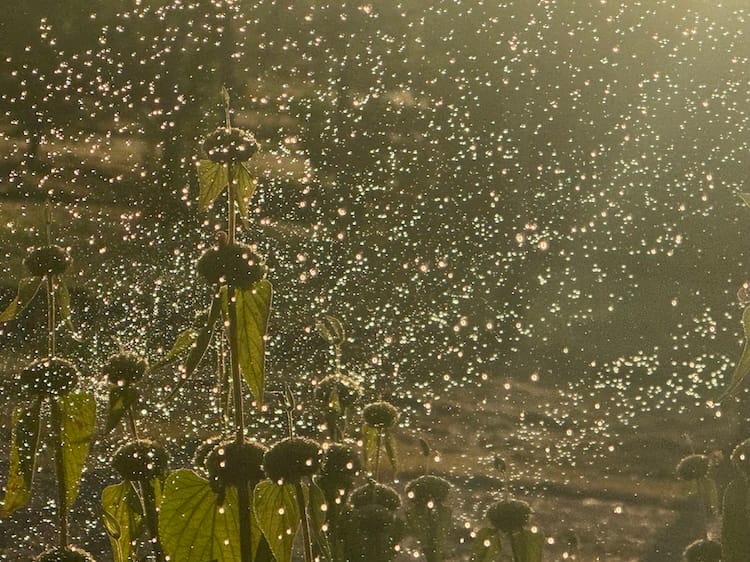
Having spent much time and money on our garden, we water on the same schedule as the harvesting farmers to keep it alive.
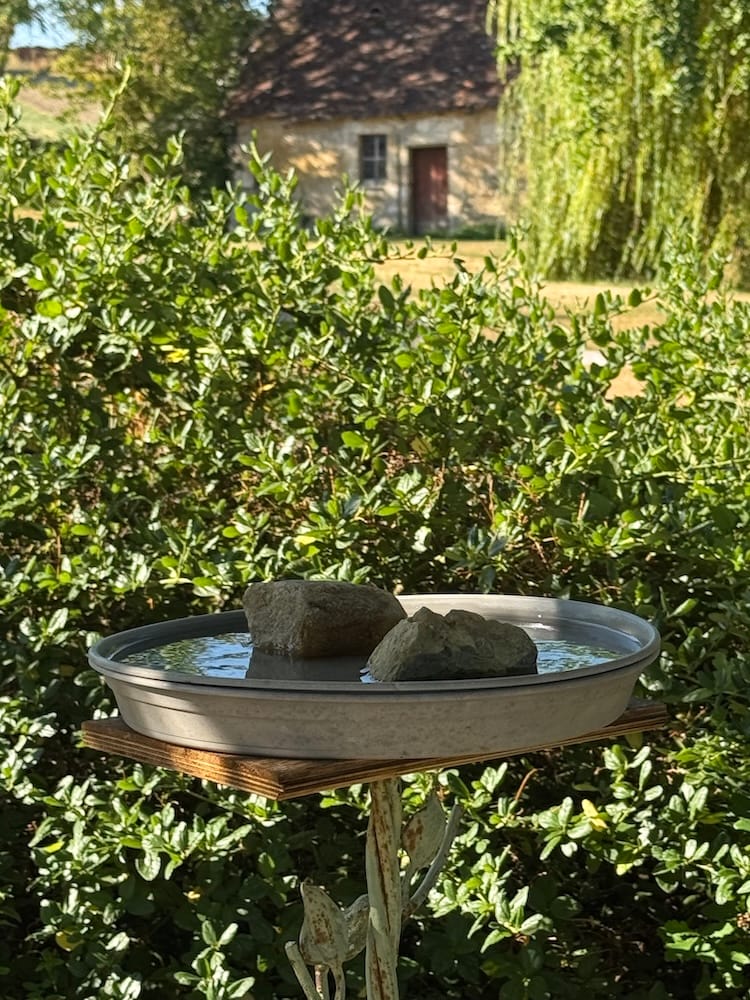
To help the fauna, I constructed a not very elegant but functional bird bath on top of a broken feeder...
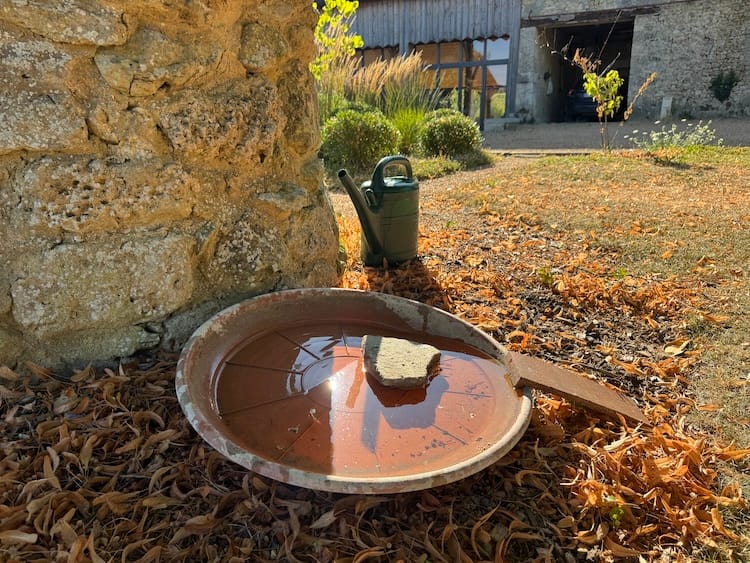
...and have used other plant saucers to provide water for four-legged creatures, complete with exit ramps so they won't drown...
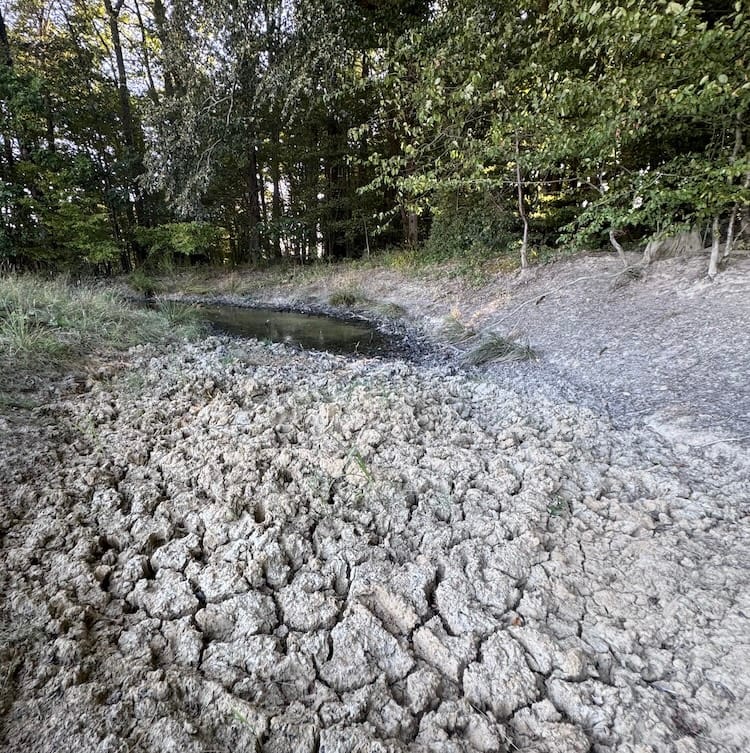
I check our four ponds, and three of them still have water, though one isn't much more than a sludgy puddle.
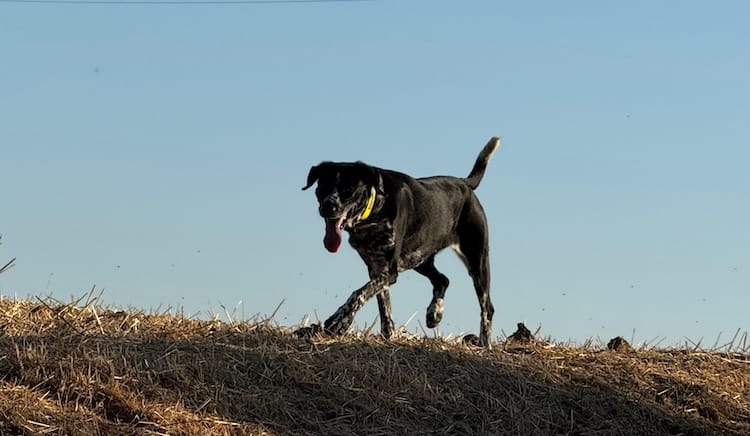
These are pitifully small gestures, but I have to do something to combat the effects of my early morning walk with Tasha.
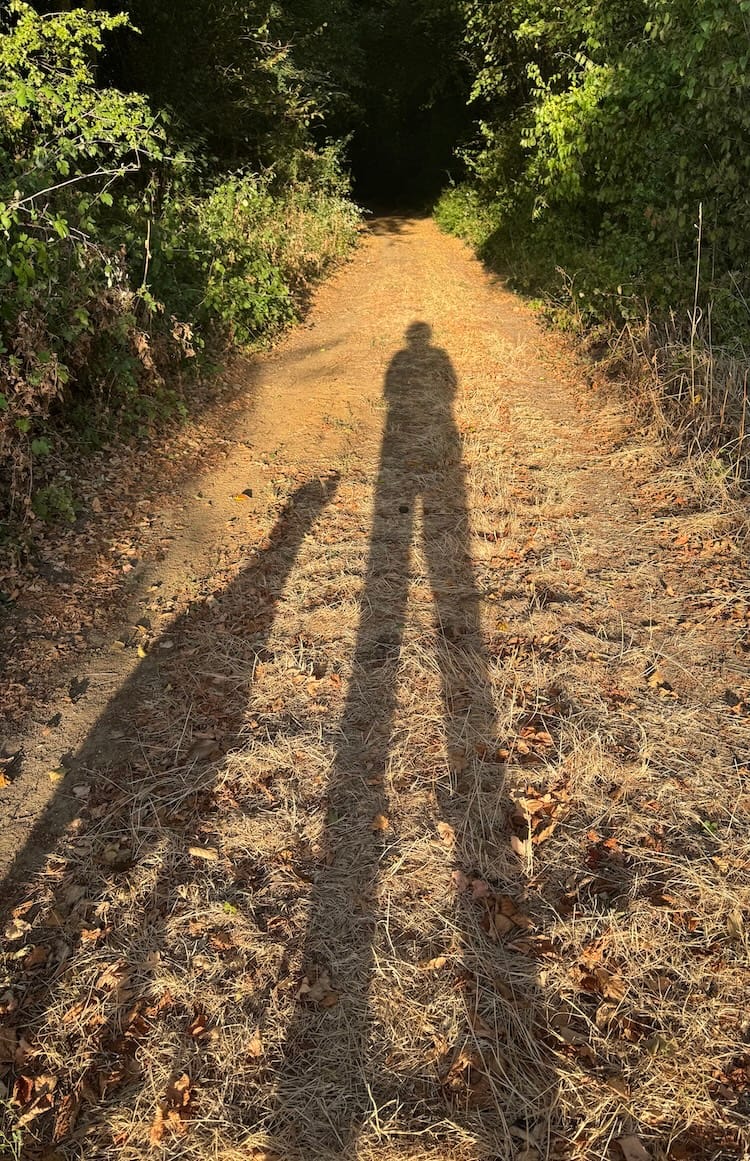
The ground is cracked and dusty. The grass has gone from brown to almost white. There's no dew. My feet crunch on leaves that bushes and trees have shed to shore up their energy against the punishing sun and ferocious wind that kicks up most days.
The wood pigeons still coo, but beyond the odd peep, there's no sign of the songbirds. The swallows, of which we had a garrulous group of 20 until two weeks ago, make rare, silent appearances as they swoop around for what's left of the insects. Otherwise, the crows complain loudly and often and it's creepy. But what gets me the most as I round the last bend on the way home is the keening of the buzzard couple who live in our wood as they comb the fields for mice and voles. They keep at it much of the day. Their eerie cries fuel a constant thrum of dread and profound sadness.
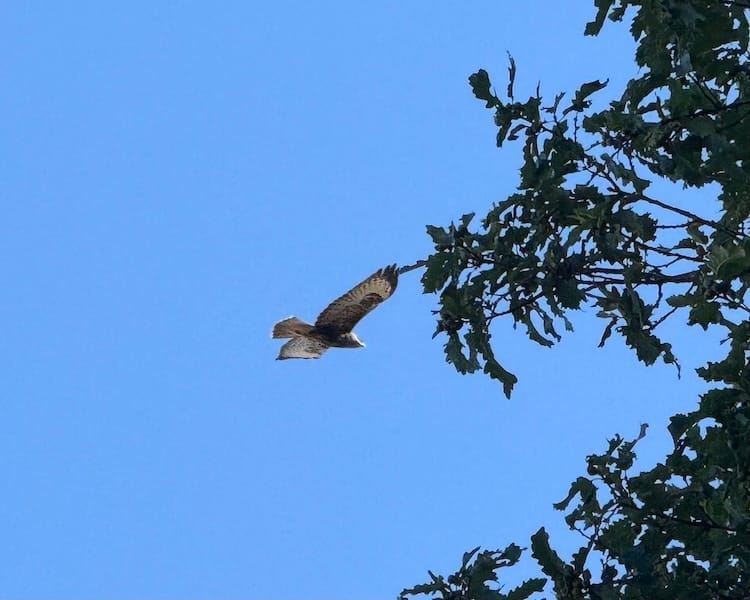
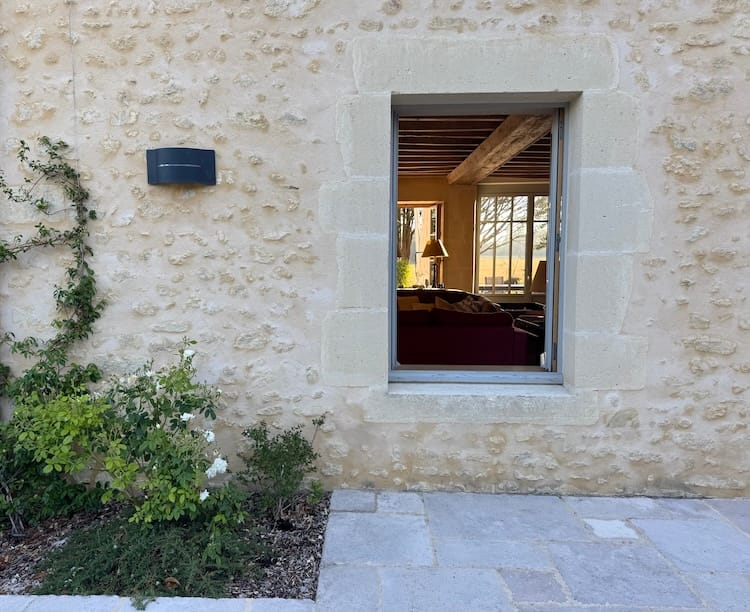
The answer to the question of how we are here in the Perche is: fine and not fine at all. We retreat behind our metre-thick stone walls for the hottest part of the day and keep our garden alive while the plants and bugs and animals and birds that are on their own are dying.
Which might be bearable if you believed this summer was an anomaly, a one-off crisis. But it's not. It's part of an intensifying catastrophe of our own making, and how anyone could truly believe otherwise at this point, I don't know. Yes, there are climate cycles, but only humans and meteorites are capable of effecting planetary change at this accelerated pace.
I wish I could sign off for summer on a happier note, but the future of the natural world I so cherish looks too hot, too dry, too dark.