A Tale of Two Cities
Friday, 20 February
Until last week, I always felt embarrassed when someone would mention Bruges or Ghent, two renowned Belgian cities that everyone but me (and my husband David) seemed to have visited. Caught up in the transhumance between Paris and the Perche (or before that the Berlin-Paris version and before that, another country house and the demands of many children), we have too rarely taken advantage of a fringe benefit to European living: the ability to hop on a train and within hours find yourself in a new and fascinating land.
But I can now hold my head high; we have just spent four days visiting these "Venices of the North", with their lacework of canals (lots of real lace too), their beauty and complex histories.
The first stop was the smaller and farther away of the two, Bruges (a Eurostar to Brussels, quick change to a local train, and in less than three hours total we were pulling our suitcases over the slushy cobblestones towards our hotel).
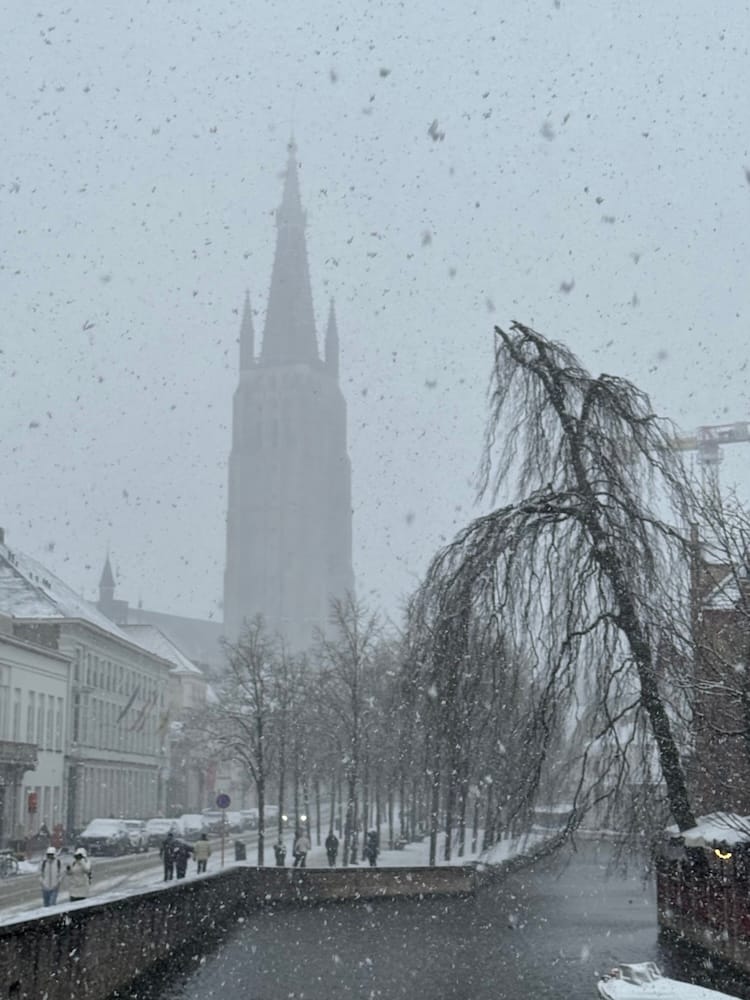
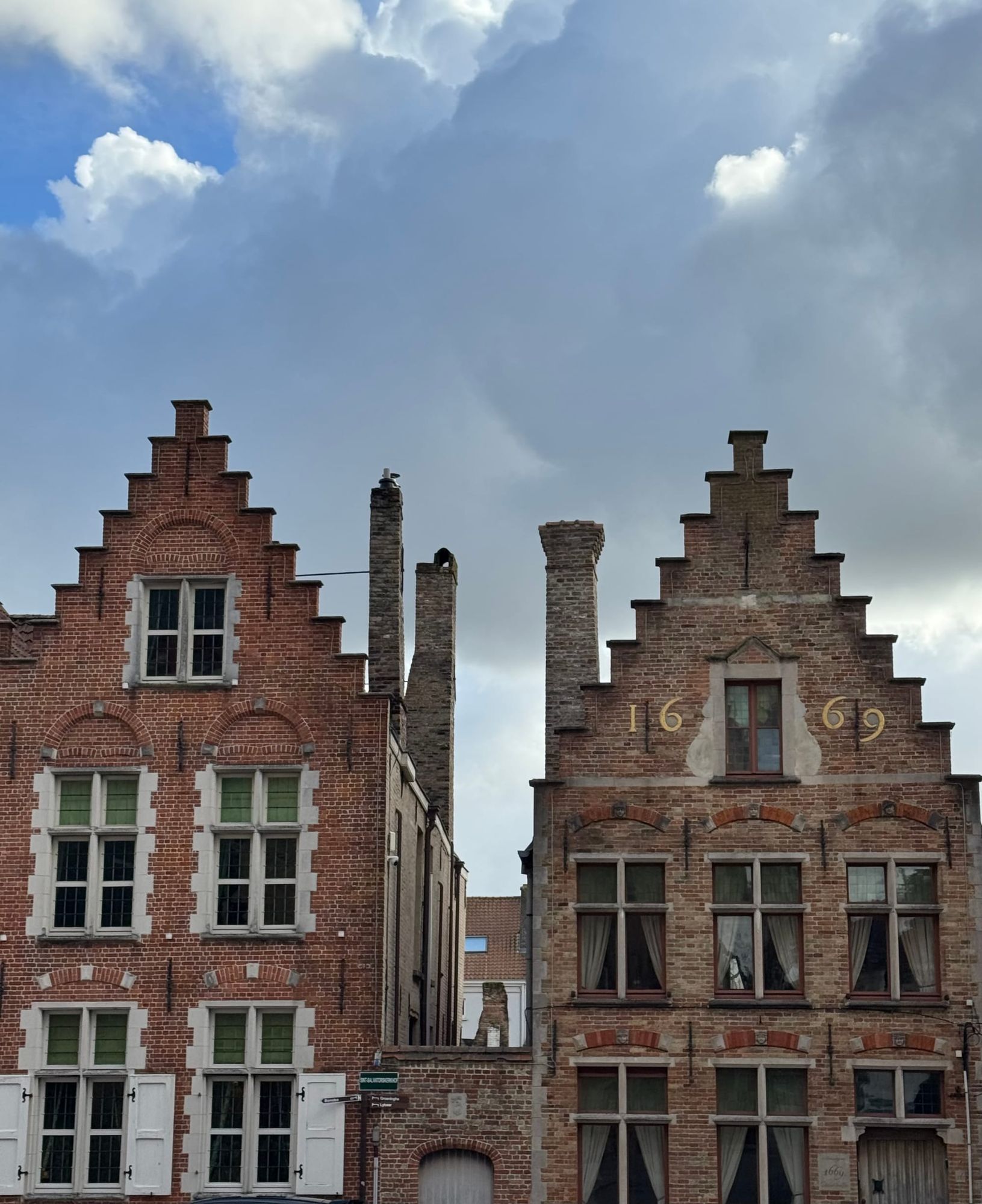
The centre of the medieval city is a UNESCO World Heritage site. You walk amidst its gabled brick buildings (top photo) and church towers as if experiencing a northern Europe before fires (London and Hamburg, for instance) or the bombs that destroyed much of so many cities during World War II.
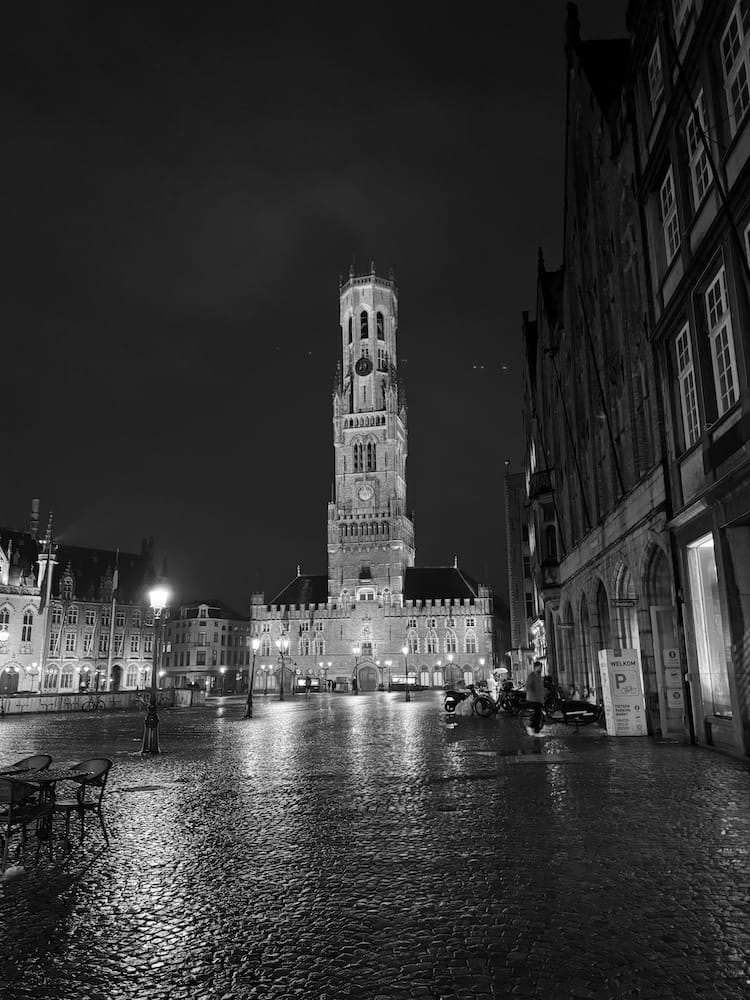
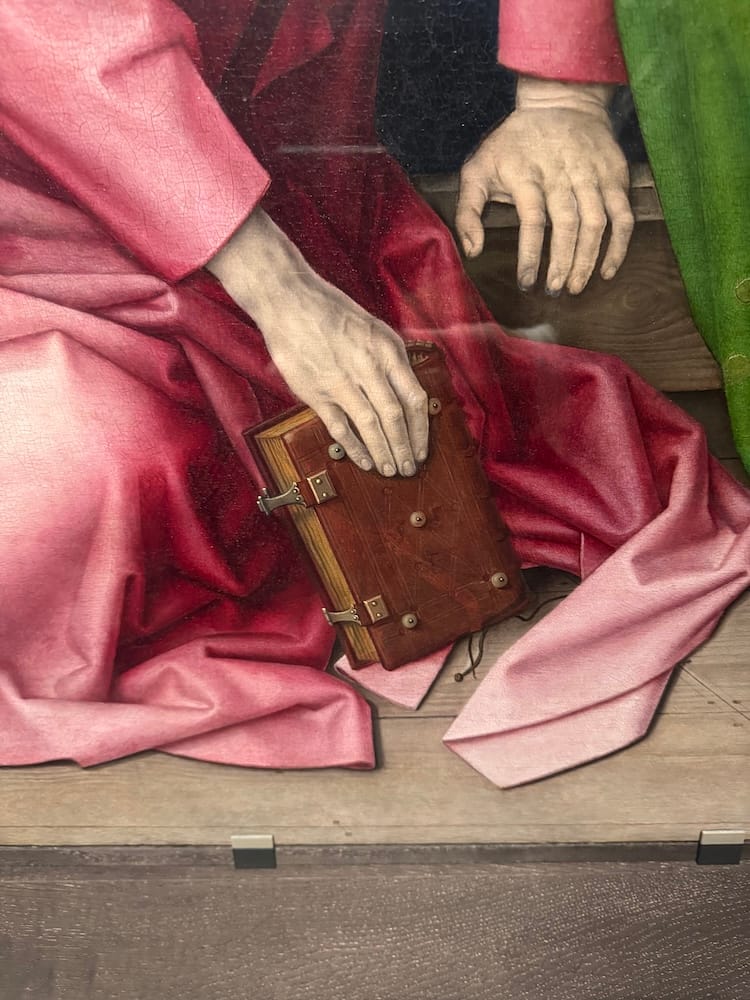
Though now it's got a jewel box aura, Bruges was once upon a time the pumping heart of Europe. A port city, it developed as part of a trade route, particularly in textiles, between the Baltic and Mediterranean Seas in the 12th century. By the 15th, it had become the continent’s financial hub. With wealth, flowed commissions for artists, and the Flemish "Primitives" (nothing primitive about them!), who revolutionised the use of oil paint, flourished. Some sublime examples, including from the most famous, Jan Van Eyck, who worked and died in Bruges, are on display at the Groeninge Art Museum...
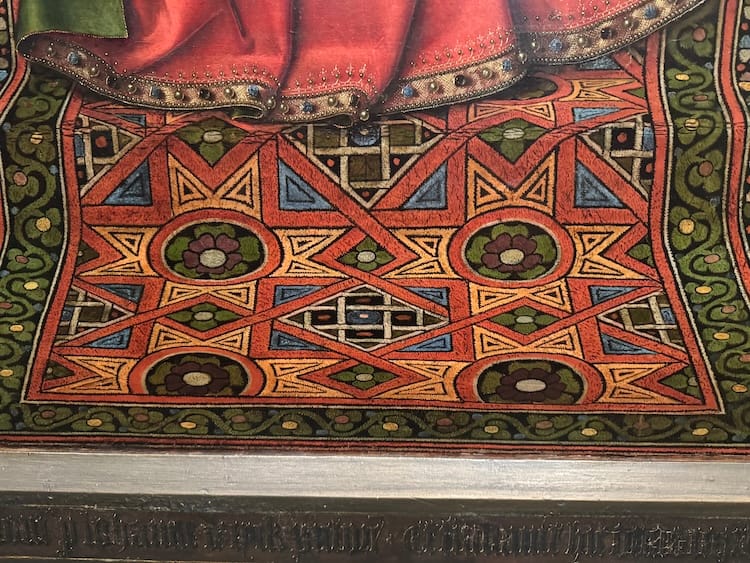
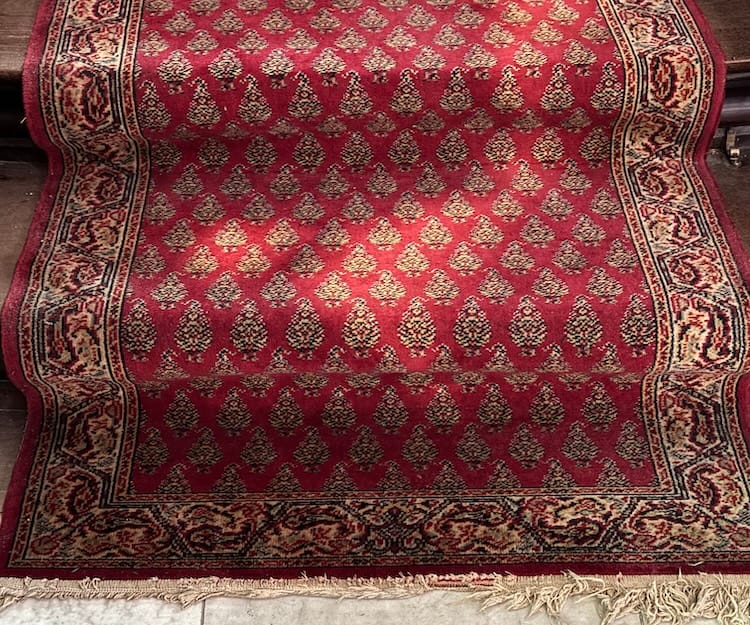
The fine brush work and gritty realism is exhilarating, maybe even more so in our age of computer created images.
The city was such a hotspot that one of the few Michelangelo's to leave Italy during his lifetime was a Madonna and Child commissioned by a wealthy Bruges merchant. They are still in their niche at the Our Lady Church. Or I should say back in their niche, after being absconded twice, once by the French during the Revolution and once by Hitler during the War...
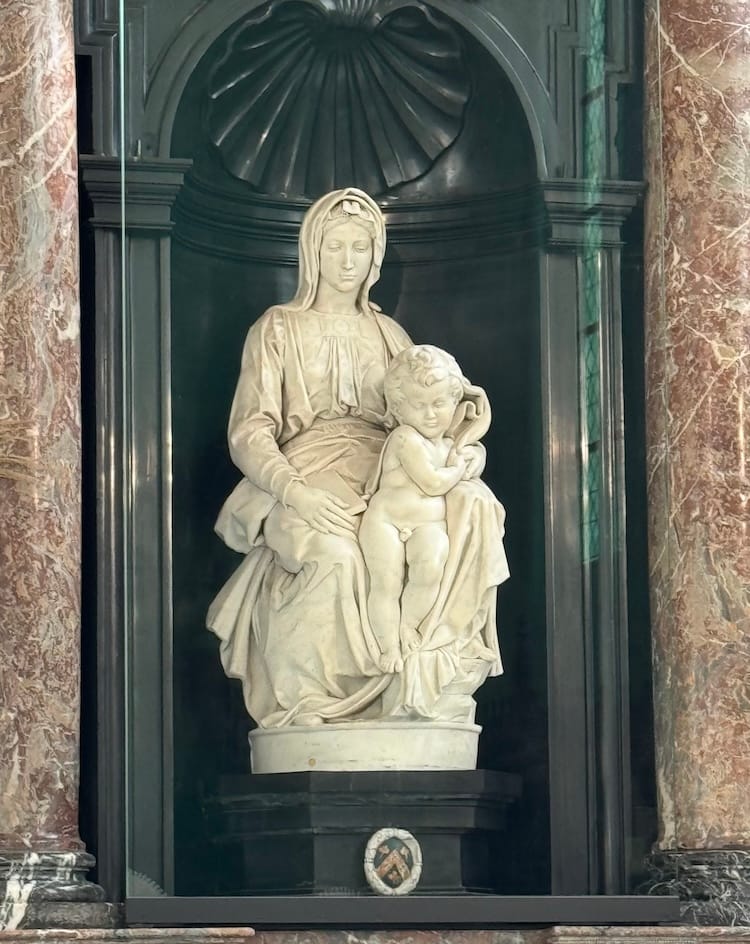
Situated in Flanders, the Dutch-speaking part of Belgium (rather than the French-speaking Wallonia to the south or the German-speaking sliver in the east), Bruges and the region in general have a long, often fraught, history with France. During its heyday, before the port silted up, it was part of the Duchy of Burgundy and explains why Charles the Bold and his daughter Marie de Bourgogne are buried in the Our Lady Church.
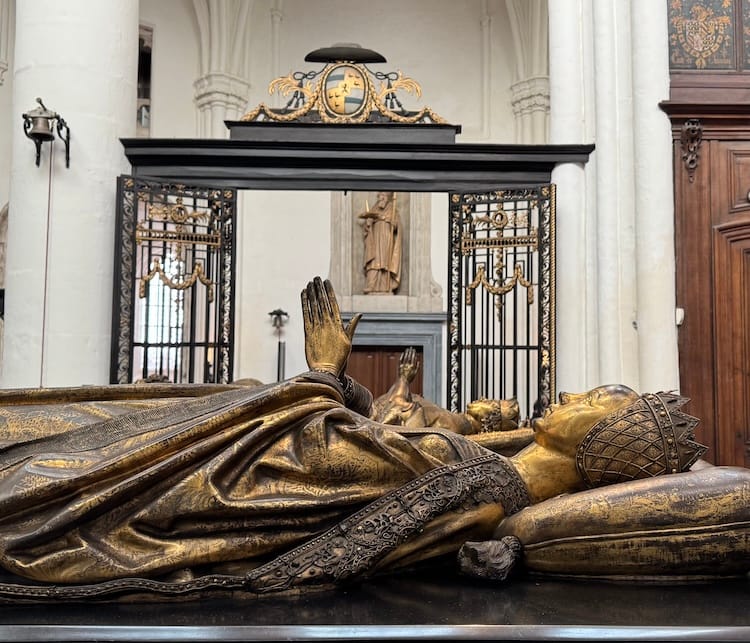
There were many Flemish uprisings against various occupiers before and after these two. European royals were constantly inter-marrying or fighting wars to gain control. Burgundian rule gave way to Spanish, which in turn ceded control to the Austrian Hapsburgs, until the French invaded again at the time of the Revolution (and took that statue, returned after Napoleon's defeat at Waterloo).
For a long time the territory was part of the "Low Countries", ie joined at the hip to the Netherlands. It wasn't until 1830 and the Belgian Revolution that it became a distinct country, with its own constitutional monarchy. But even that wasn't the end of its problems. Belgium was central in the fighting of the two world wars of the the 20th century. There have been so many conflicts in this land with no natural defences that it is called "the battleground of Europe" and therefore an apt symbolic home for the European Union and NATO in its capital Brussels. Today tensions between the Flemish and the French persist; after some recent elections, it took 16 months to form a government.
But complications seem far away from Bruges, which is crowded with tourists even in February, and every other shop sells Belgian chocolate...
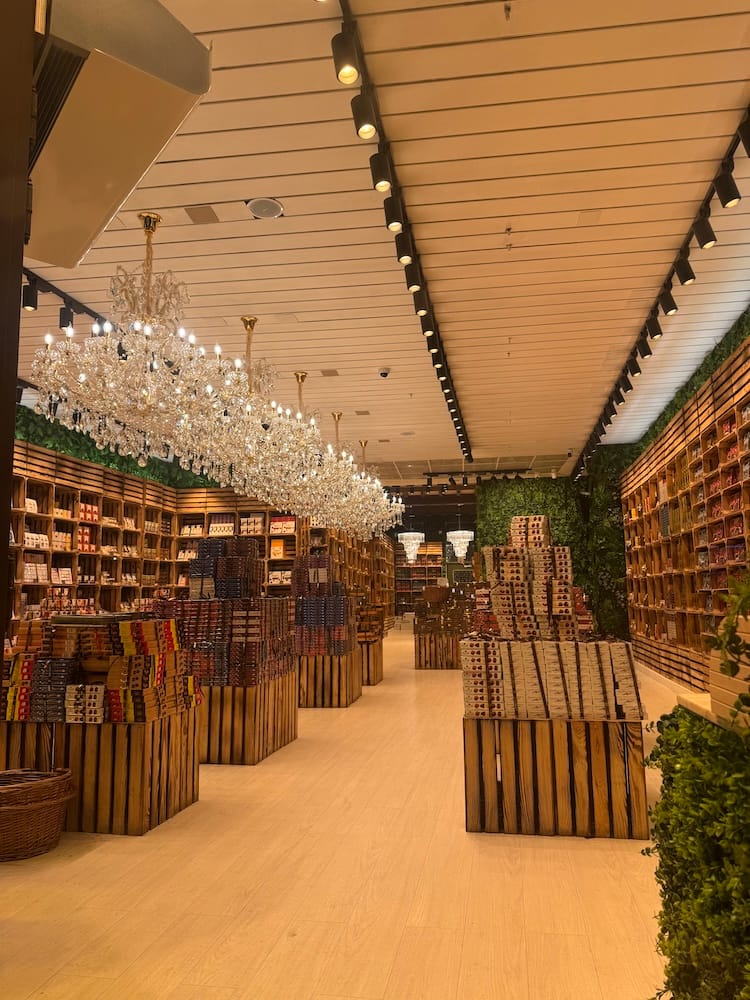
...meaning that though there must be a local heartbeat today, it’s hard to sense what makes the place tick beyond visitors like us.
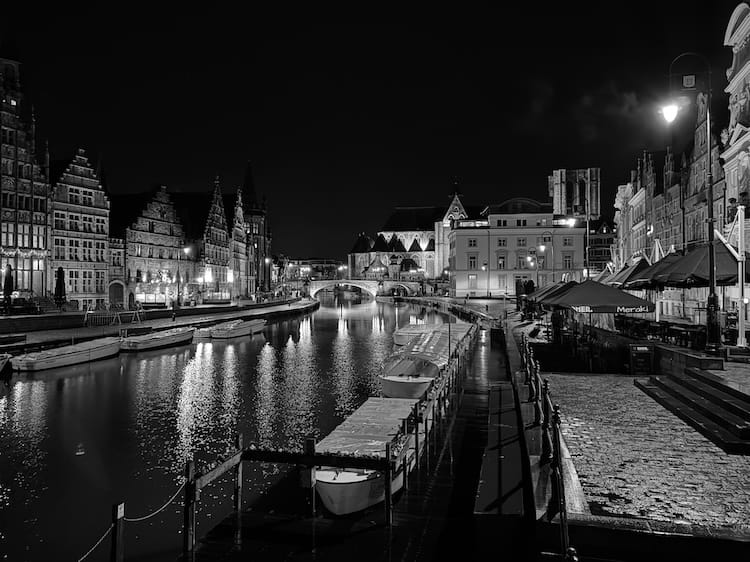
Which is not the case in Ghent. Double the population (120,000 versus 250,000), this Flemish city is still a port. It is also Belgium's university and tech hub. Arriving at the train station (only 25 minutes from Bruges), I have never seen so many bicycles.
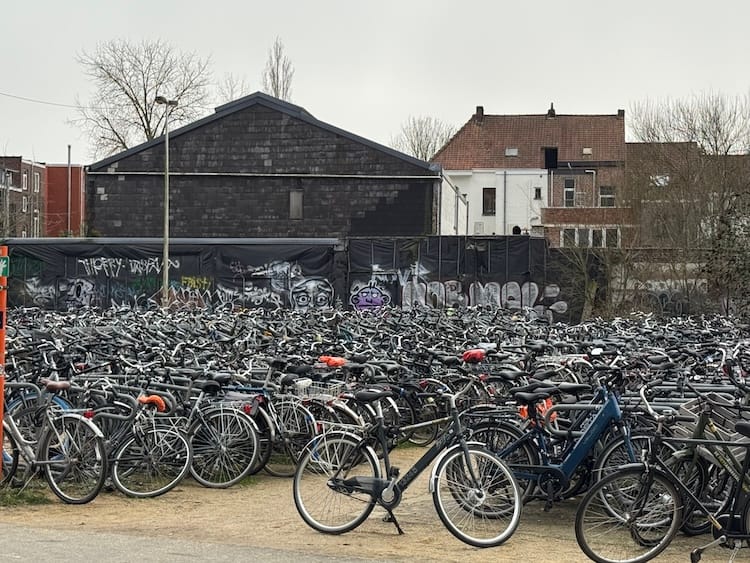
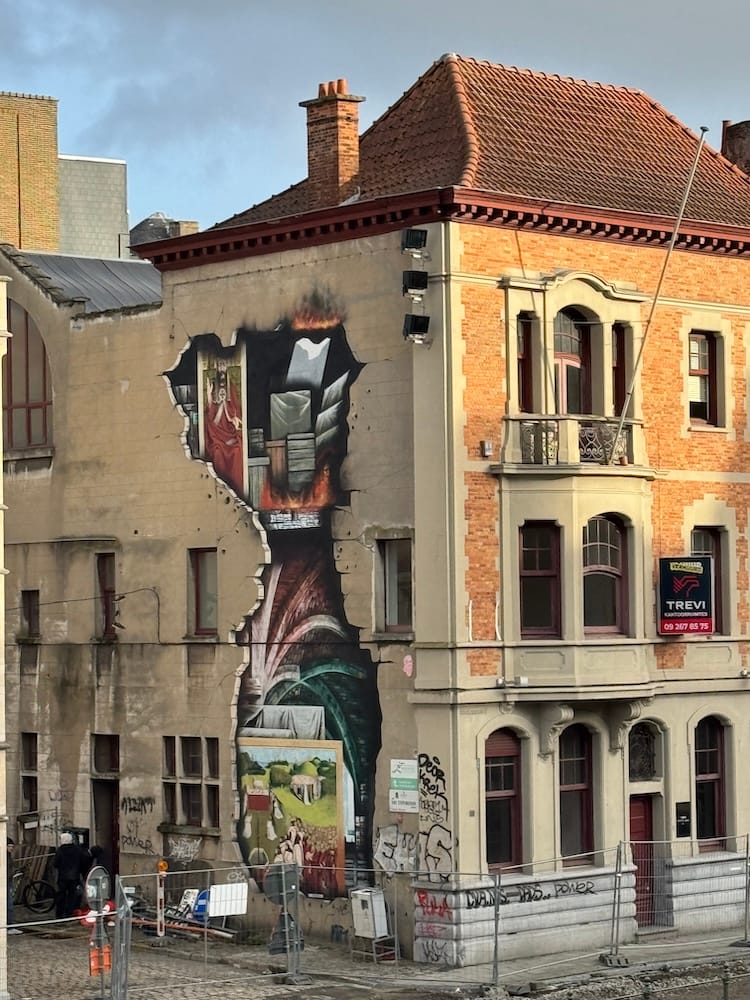
They set the tone for the bustle and an edge to the city...
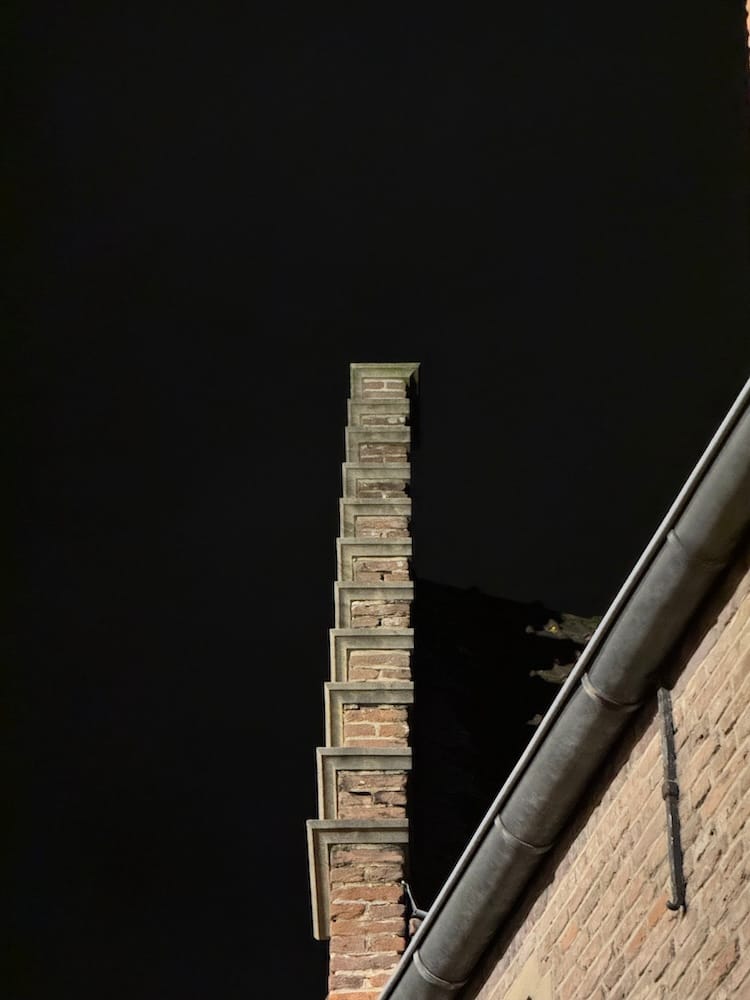
...that includes a lot of cool street art...
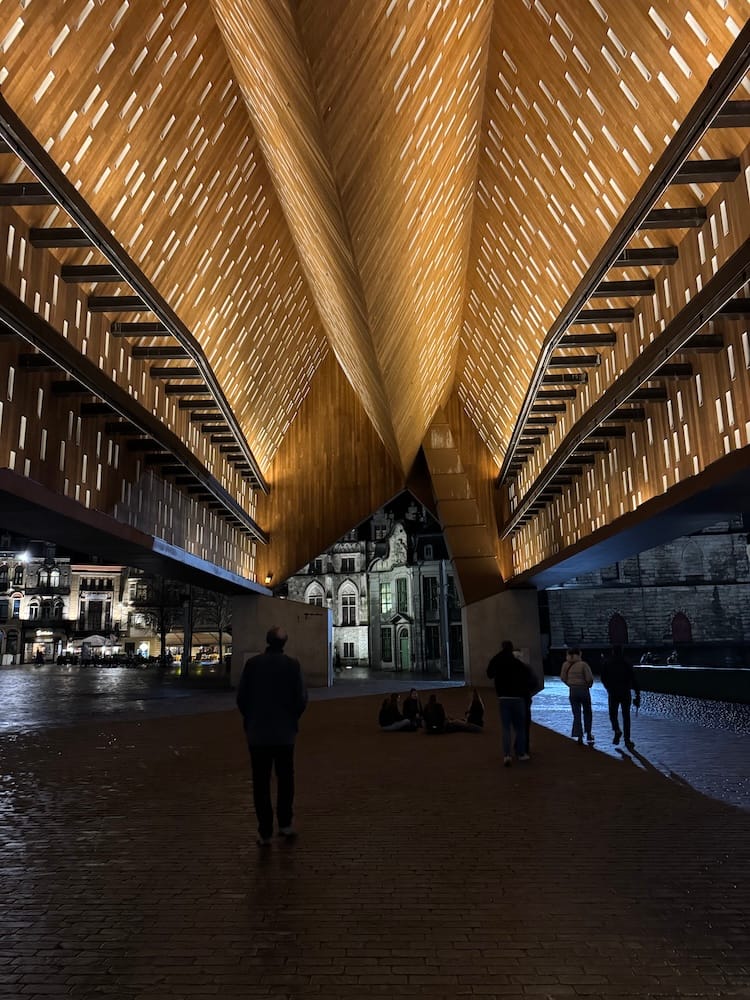
...and a stunning, contemporary market hall designed by the Ghent architect Marie-José Van Hee...
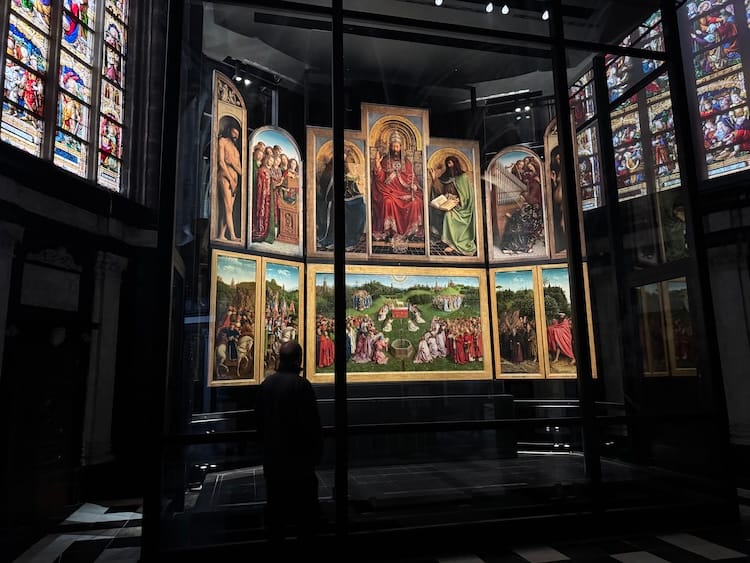
Not that it’s short on classic Flemish architecture. There are narrow, old houses on every street, and three enormous churches clustered in the centre. One of them, St Baro, houses Van Eyck's magnificent Ghent Altarpiece. The top panels are being restored and have been replaced by reproductions, but a touch of the ersatz is very 2026.
Ghent appears to balance the past and the present...
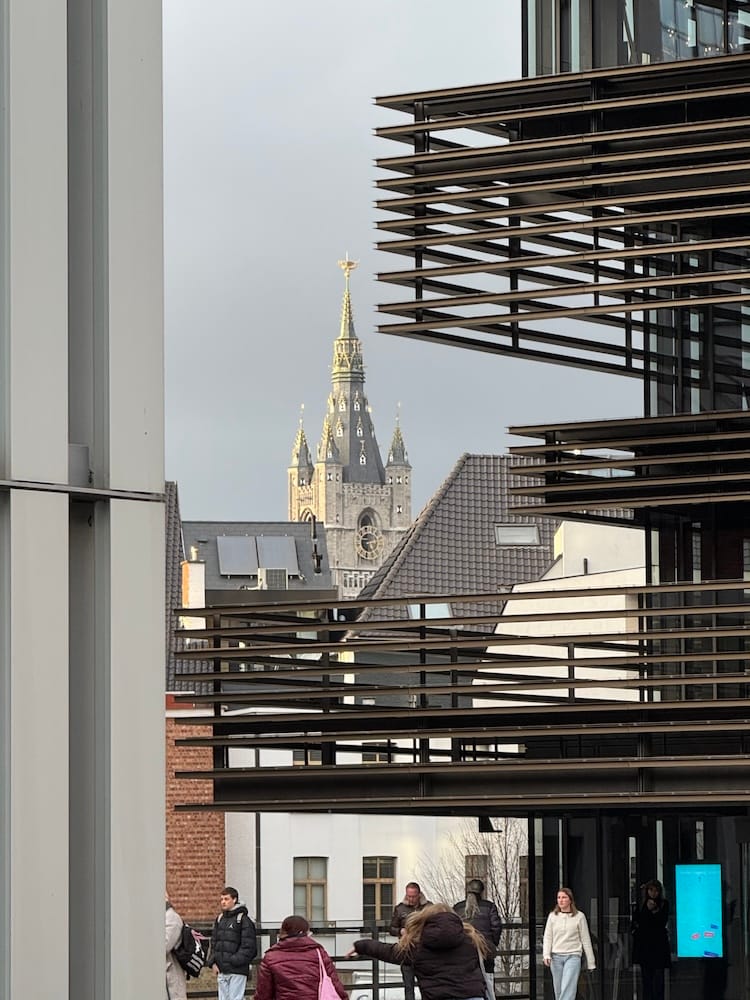
...with grace and aplomb.
But that may be yet another illusion. According to a recent article in The Brussels Times, the country is a mess, with creaky political and administrative systems and investment on the run. Despite the fact that everyone seems to speak three languages (Dutch, French and English), the Wallons and the Flamands, as I mentioned, do not get along (who does these days?).
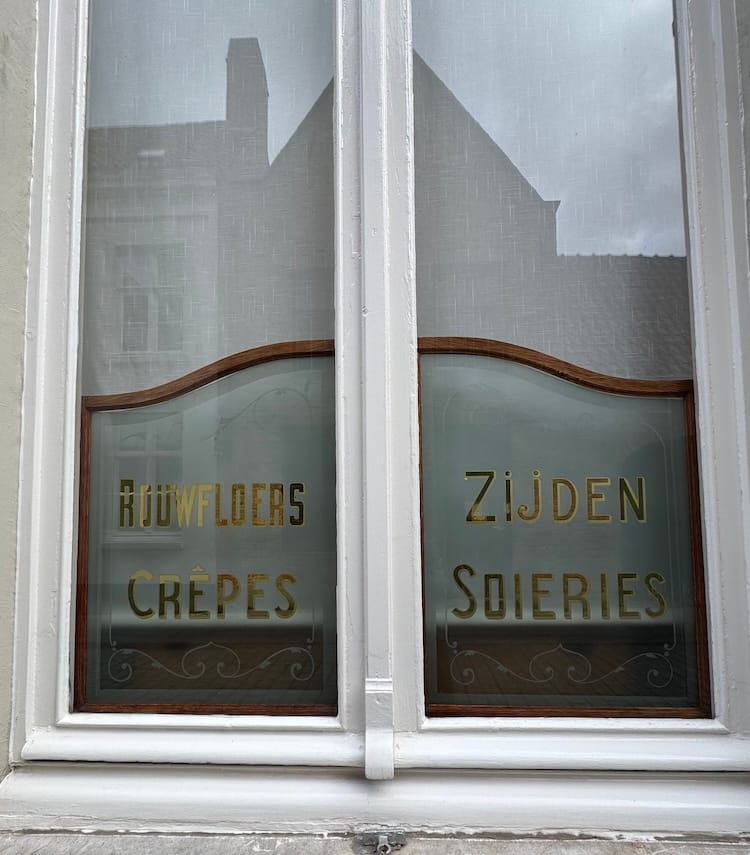
Whatever the country's troubles, these two Belgian cities can still enrich a visitor's life for a few days, so thank you Bruges and Ghent.
(And I promise: no more borrowing from Dickens in titles to come)