Wistful Wandering
Friday, 12 December
I am a borderline nostaholic. Not the kind who thinks everything was better once upon a time but the type who wades into memories, my own or the world's, and wallows like a happy hippo in the mud.
The concept of nostalgia, composed of the Greek nostos "return home" and algos "pain", was conceived by the Alsatian medical student Johannes Hofer in a 1688 dissertation, "Dissertatio curiosa-medica, de nostalgia, vulgo : Heimwehe oder Heimsehnsucht". Heimweh is the German word for homesickness and Sehnsucht means yearning or craving, often for the past.
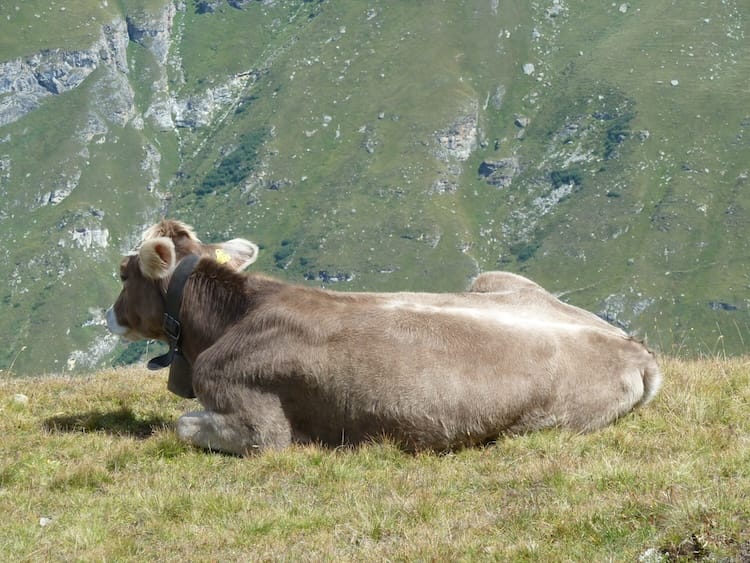
At first considered one and the same, nostalgia-homesickness was thought to be a physical disease caught by people who travelled abroad (in Hofer's study, Swiss mercenaries). Symptoms could range from fits of weeping to heart palpitations to loss of appetite and yes, even to death. As time went on, theories on its causes multiplied. One held that air pressure was a contributing factor, another that the sound of Alpine cowbells caused nostalgic brain damage.
It wasn't until the 19th century that the condition came to be regarded as a psychological state (linked to melancholia or depression) and not until the second half of the 20th that it was viewed separately from homesickness and in a more positive light. Today nostalgia is defined as: “a sentimental longing or wistful affection for a period in the past.”
The sentimental longing can lead to nasty stuff, like extreme nationalism or the angry populism we are seeing today. But with the wistful version, one looks back bittersweetly, at the good and the bad, with emotion and wonder.
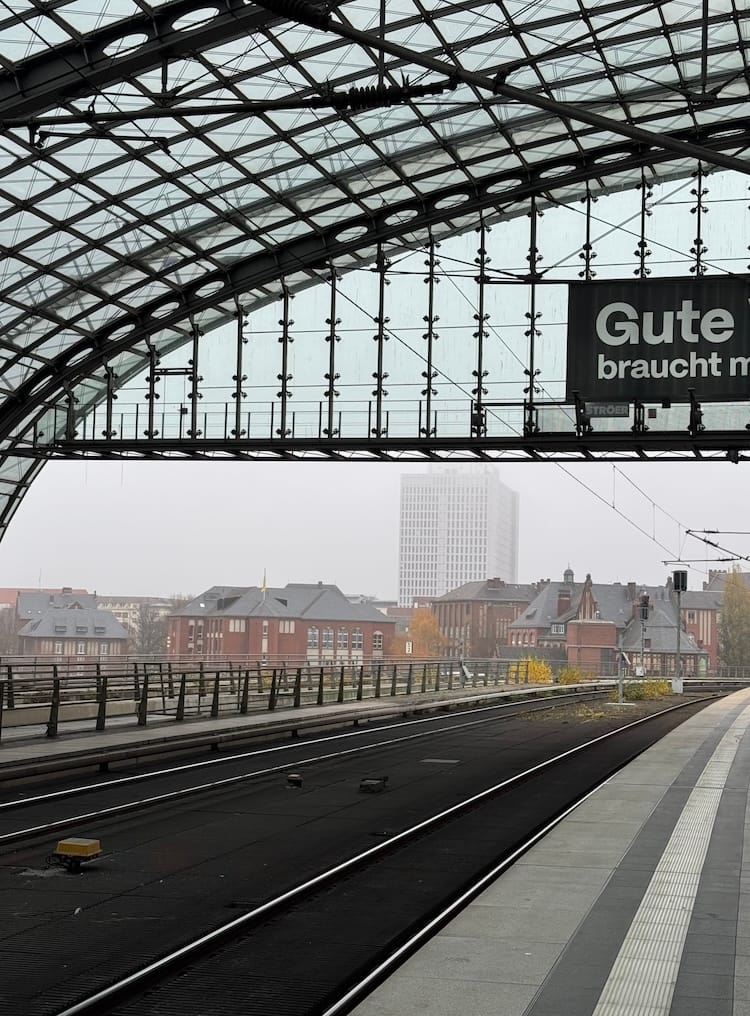
That's what I did, anyway, during our recent short trip to Berlin, where from 2013 until mid-2019, my husband David and I half-lived and where this photo-essay, originally entitled A Paris-Berlin Diary, was conceived.
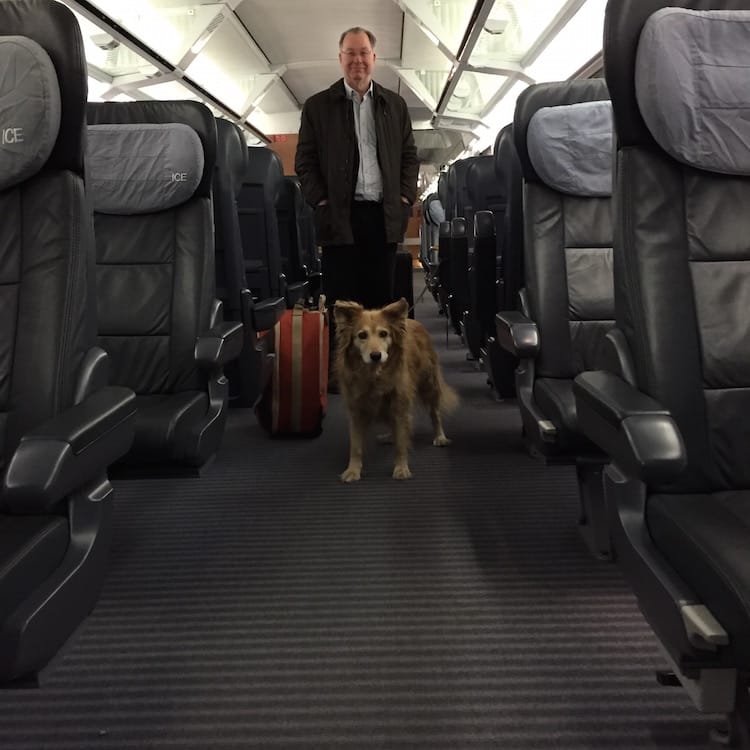
It started at the Gare de l'Est, as soon as I boarded the German ICE train, with its rigid German conductors and the whiff of Szegediner Gulasch effusing from the bar car (yuck). In those days, we took it often with Elsa...
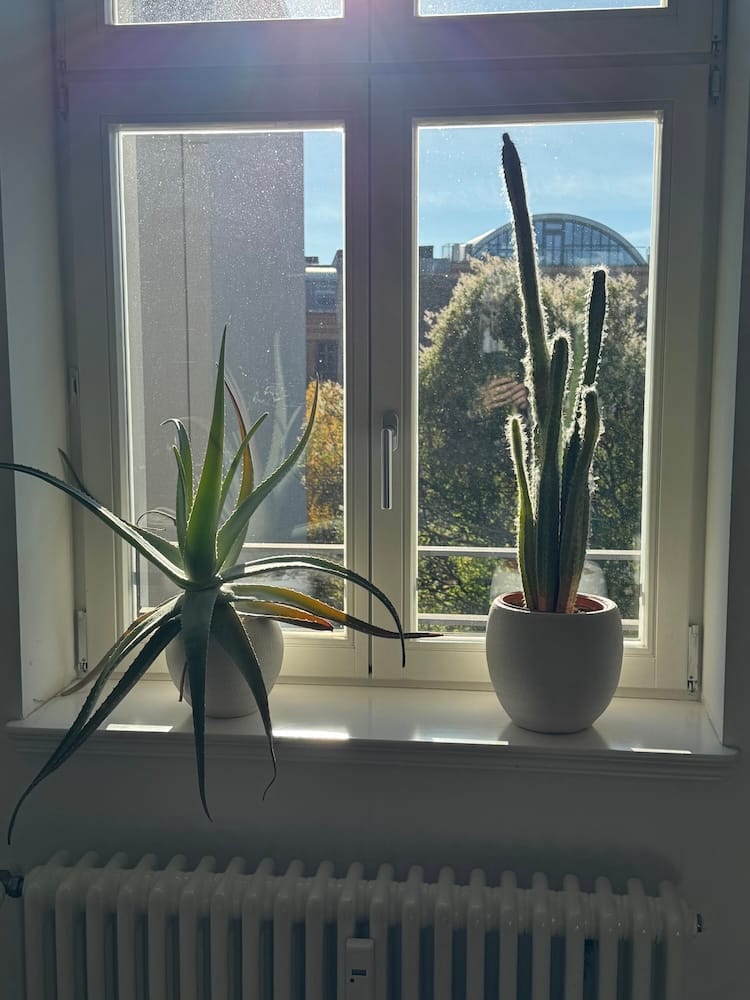
The Airbnb where we stayed was in our ur-Bezirk not far from Alexanderplatz in formerly East Berlin. The apartment was even similar to the first furnished place we rented: top floor duplex with views onto neighbouring rooftops, windows high enough to catch the disappearing light of a Berlin autumn.
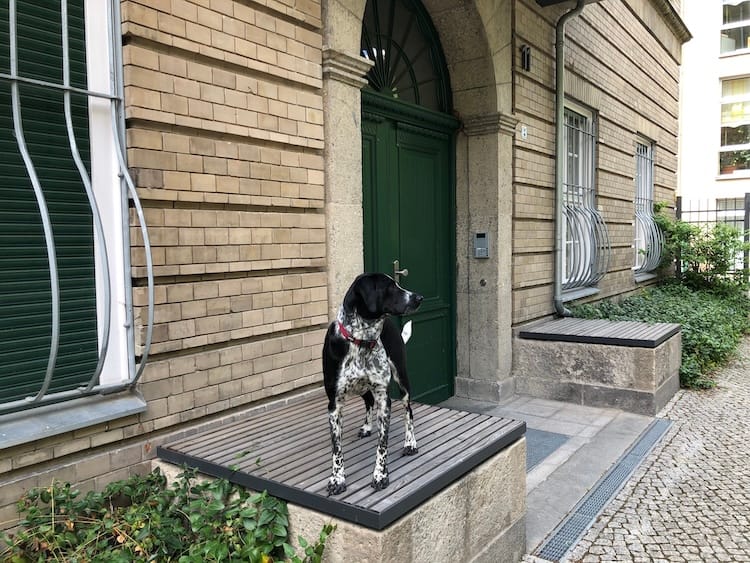
Naturally, our itinerary veered sharply from the average tourist's. Instead of visiting the Brandenburg Gates, we beelined for our old hood of Alt-Treptow and walked by our old house (David's name is still on the interphone to his office!).
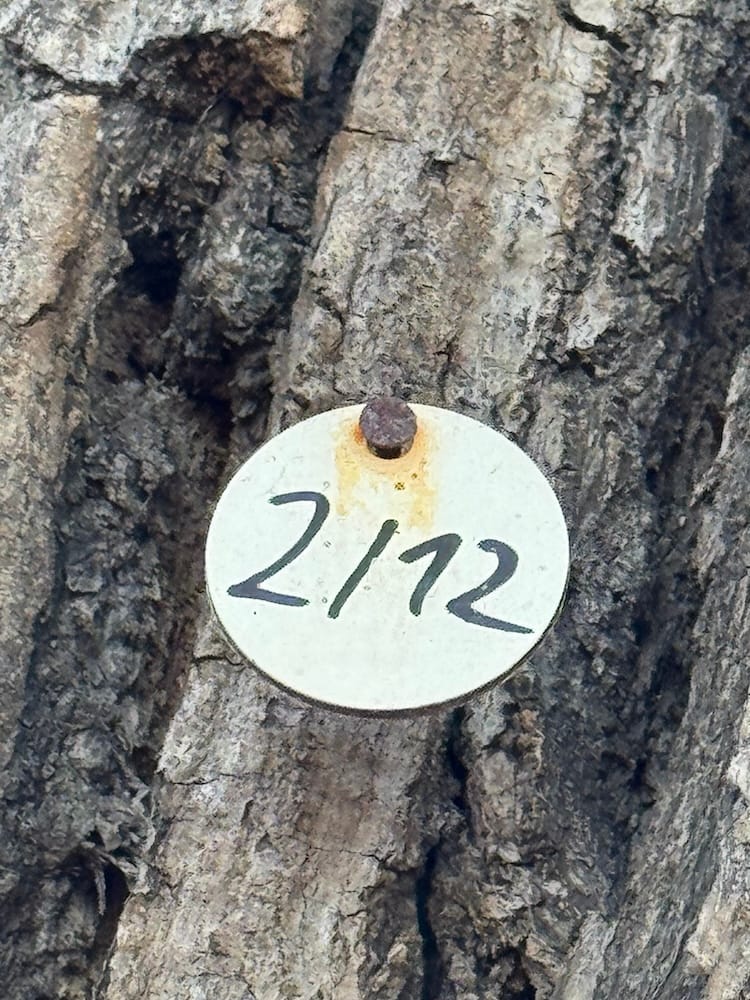
Instead of walking in the Tiergarten, we strolled through Treptower Park, where I walked the dogs every day. It was reassuring that the odd practice of numbering the trees had not changed...
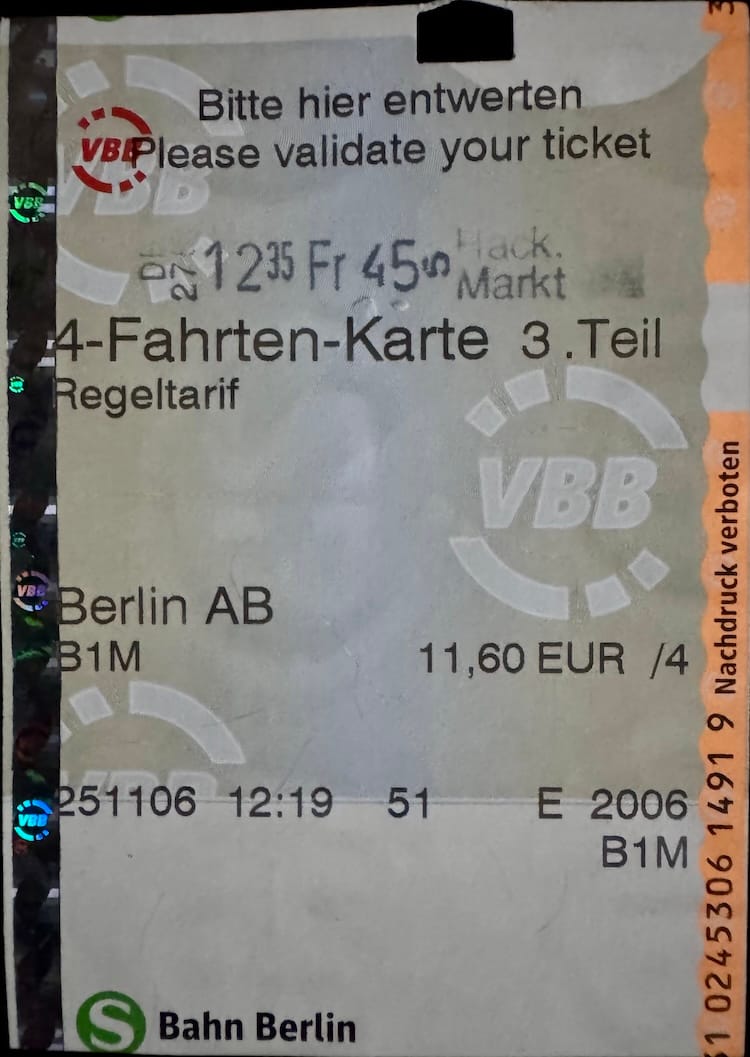
...nor had the ridiculously outdated tickets for the U- and S-Bahn that you can still only buy four at a time...
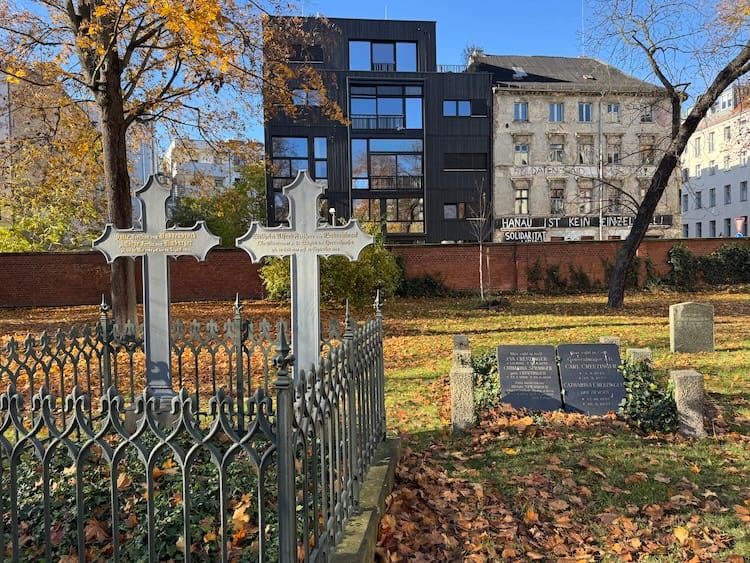
Instead of visiting the Charlottenburg Palace, we walked down the street to see if the squat we remembered from our first days in Berlin had survived the steroidal gentrification of the area.
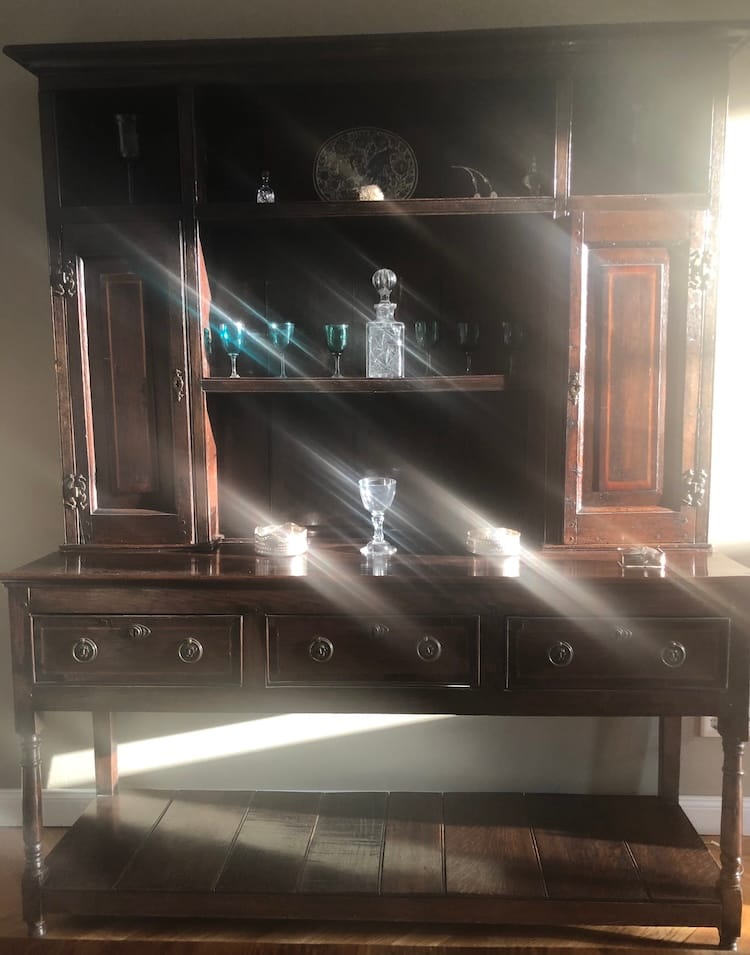
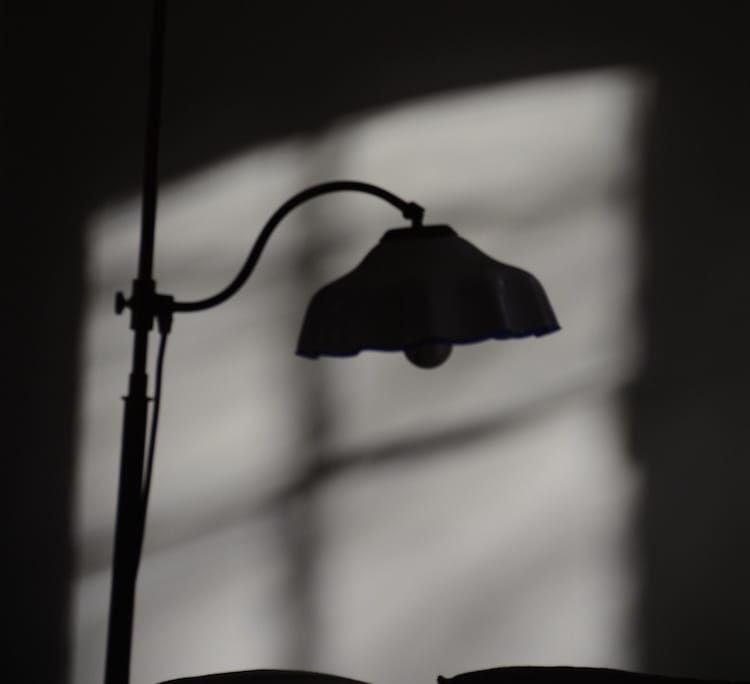
At the Kollwitz Platz Saturday market, where we continued to shop even after moving to Alt-Treptow, the goat’s cheese lady, the pasta people and the saucisson seller were still there but not the fruit and veg lady who bothered to track me down after I'd dropped my French driving licence at her stall. We bought another lithograph at the Kollwitz Kabinett, where we'd also purchased several lamps with glass shades, including the one lighting my office right now on this dark morning in the Perche.
Friends invited us to see an unusual Verdi opera, Simon Boccanegra, at the Deutsche Oper (thank you again, Philipp and Winnie!), and we attended the exhibition on post-War art (a form of nostalgia itself) at the Mies van der Rohe building near the Potsdamer Platz with our friend Katharina.
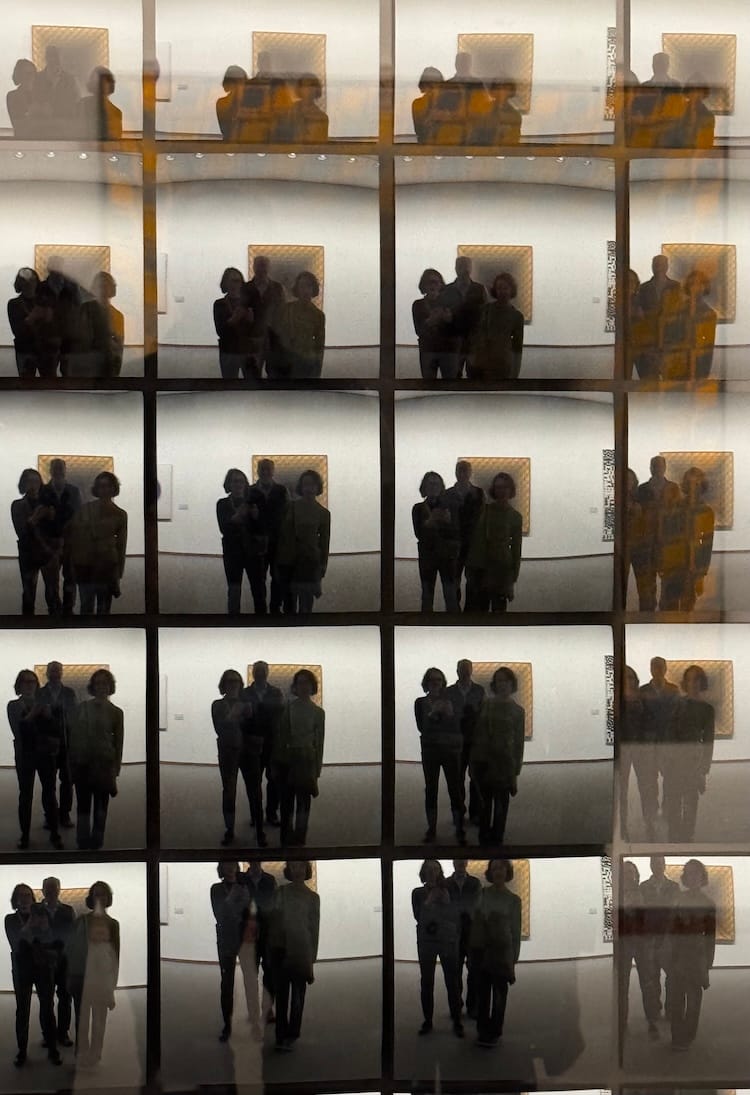
Everything was redolent of the years we lived there, and the effect was to create a whirlwind of heightened sensations, a connection to the past, that for me constitutes the joy of nostalgia. The best way I can illustrate the feeling is this photo...
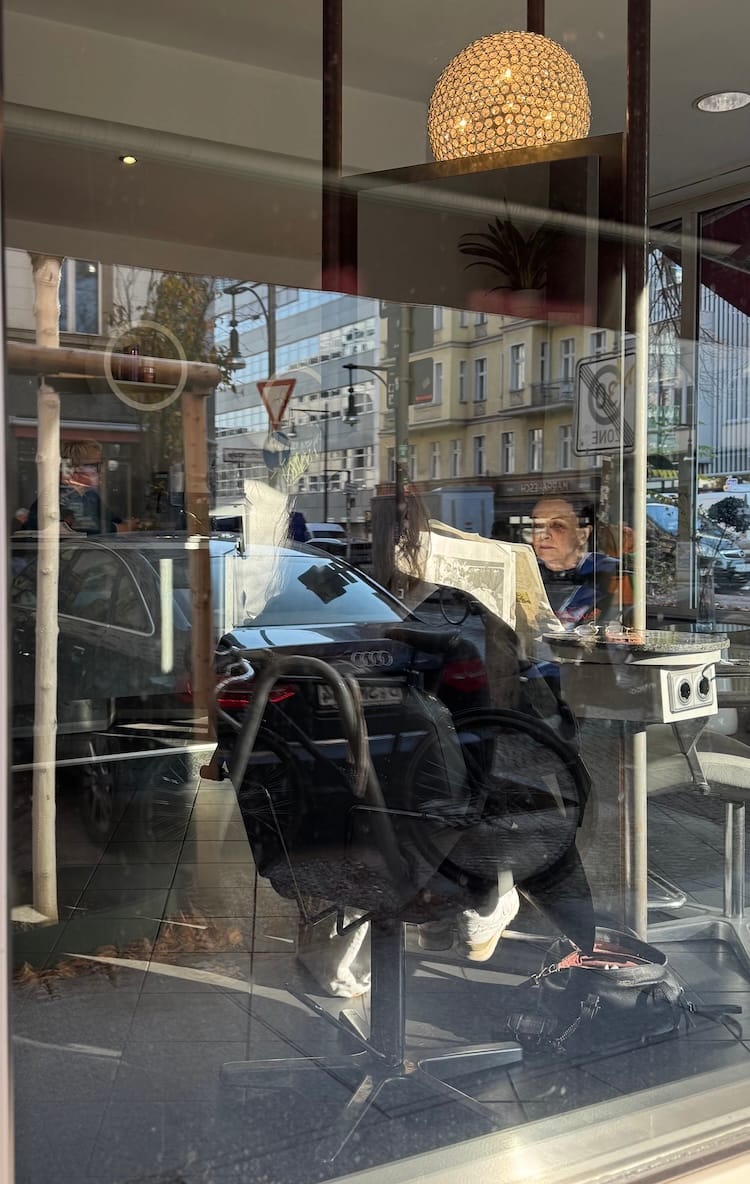
...a palimpsest of fractured images, each one with a Berlin association - bikes, a fancy German car, pre- and post-War buildings - and at the heart of it, this older woman reading the newspaper (on real paper) while getting her hair dyed. She probably grew up right there in Prinzlauerberg when it was still part of East Berlin, before it was über-trendy and expensive. The Friseur itself seemed a survivor of a different era.
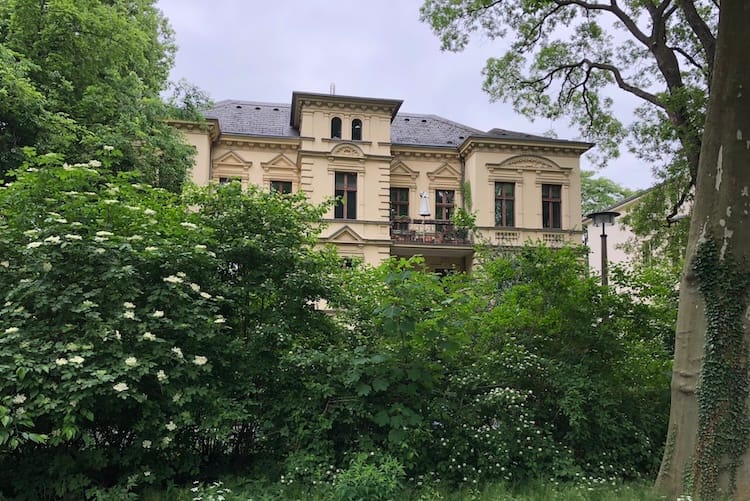
Because nostalgia helps connect the dots in our own life, as well as in the bigger picture, it is not surprising that Berlin, with its layered history - both its grand...
...and its tragic...
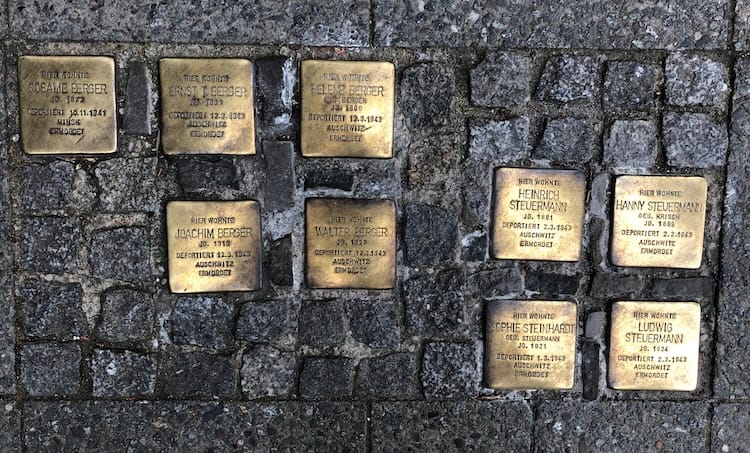
...sides - was a natural draw for a borderline nostaholic like me.
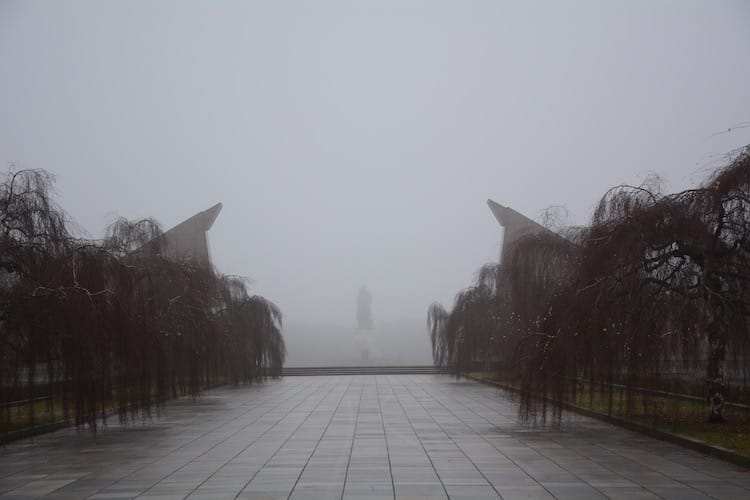
Living between the two cities made me think a lot about the meaning of Home. I wondered in these virtual pages when it is you start feeling fused with the morning light, instead of merely observing it.
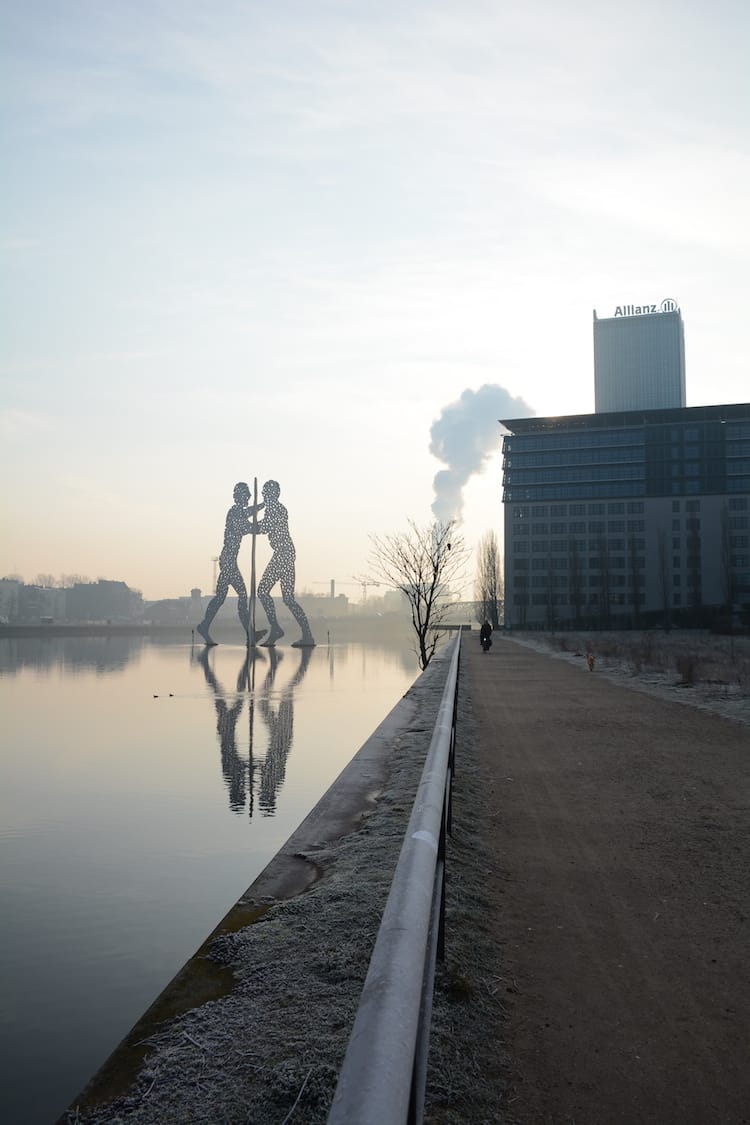
Fascinated though I was by Berlin, I never felt fully fused (and thankfully David didn't disagree). I missed Paris.
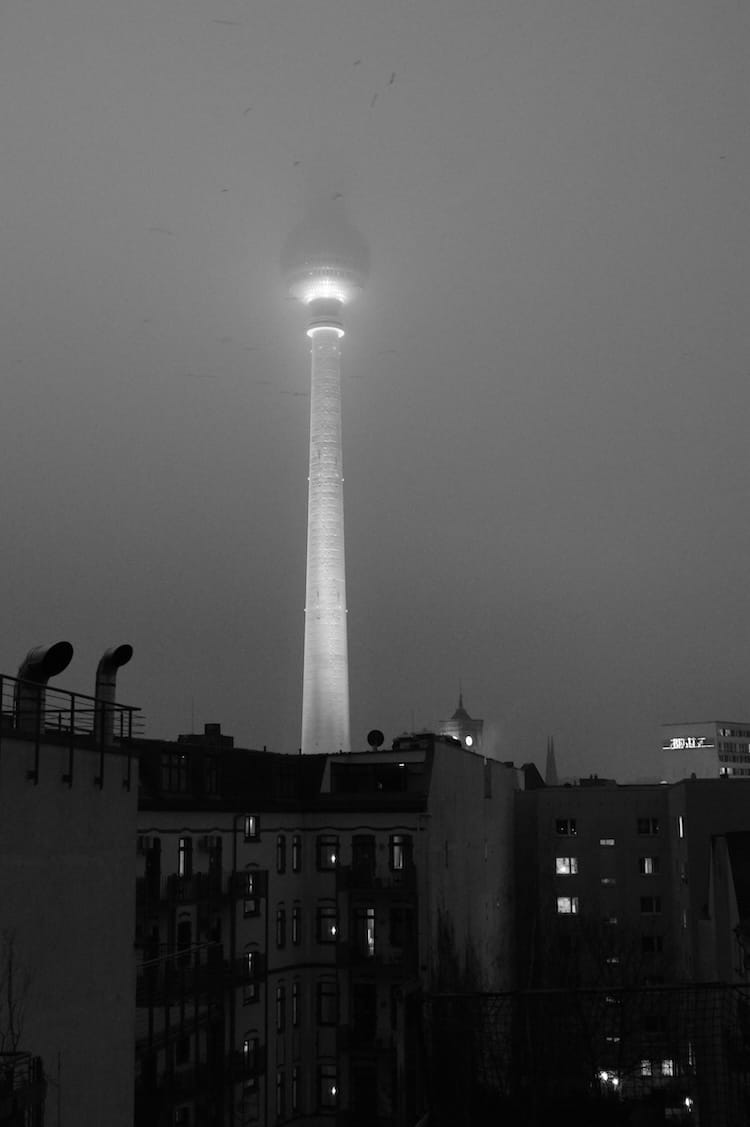
Which brings us back to Herr Doktor Hofer. During the Berlin half, I had the two most serious health scares of my life: a torn retina requiring 93 laser zaps to repair and an acute pancreatitis necessitating nine days in the Charité hospital, a building which kept popping up on the horizon, all during the visit.
Perhaps nostalgia and homesickness can be hyphenated; perhaps the condition can be physical after all. But that doesn't mean I don't enjoy a wistful wander back from time to time.